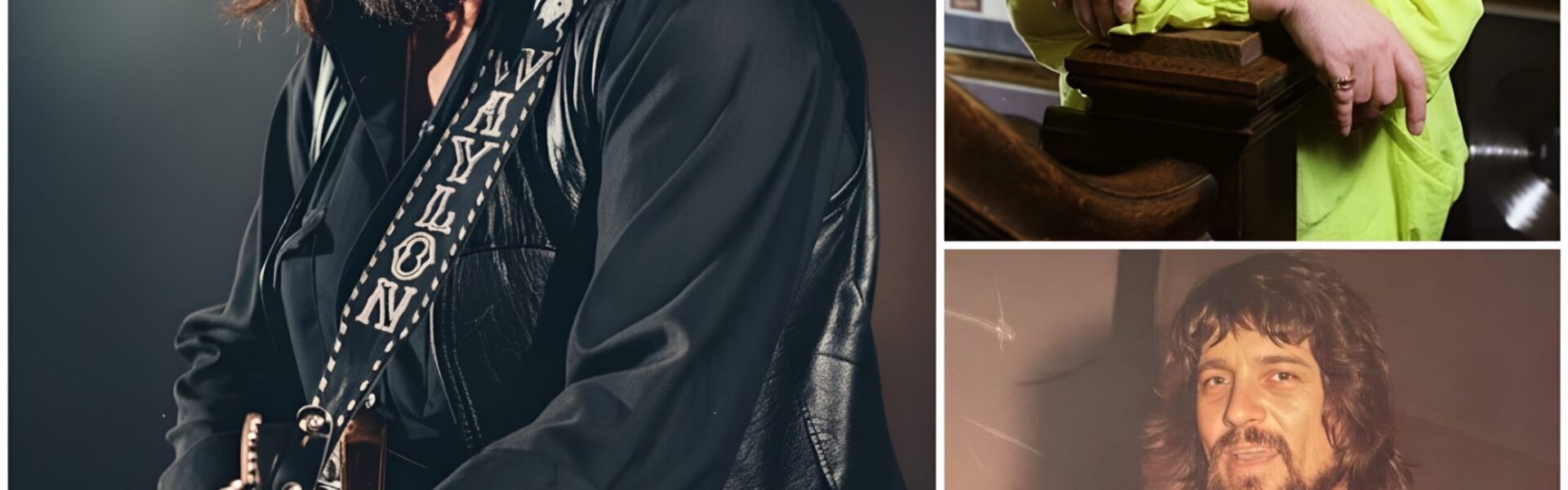

Waylon Jennings – Shine – A Late-Era Outlaw Promise That Refused to Fade
The Song and Its Place in Waylon’s Timeline
By 1981, the outlaw country wave that Waylon Jennings helped pioneer was losing its underground edge and drifting toward the mainstream. The movement had already peaked, the radio landscape was shifting, and newer artists were starting to dominate country playlists. In that moment of cooling rebellion, Jennings released Shine, a compact, rebellious single that felt like both a personal vow and a public reminder.
Written and recorded by Jennings himself, Shine dropped in November 1981 through RCA Nashville as the lead single from his album Black on Black. At just under three minutes, the song wastes no space. It carries the attitude of a man who had already been labeled difficult, reckless, or outdated—and still refused to bow to any of it. Instead of defending himself, Waylon did what he always did: turned the criticism into identity.

The Storm Behind the Studio
Black on Black was recorded at Chips Moman’s studio in Nashville during one of the most chaotic chapters of Jennings’ life. Endless touring, mounting debt, and a spiraling drug dependency—especially his expensive cocaine habit—were consuming both his health and finances. He later admitted that he traveled with an oversized road crew and burned money faster than he could count it.
Yet, despite the turbulence, the album still climbed high on Billboard’s country albums chart after its 1982 release, proving that Jennings’ career was bruised, not broken. Shine stands as the clearest voice on that record: not a man collapsing under excess, but one clawing toward clarity.
Chart Performance: A Necessary Comeback Strike
Commercially, Shine hit its target with precision. In the United States, it rose into the Top 5 on the Billboard Hot Country Singles chart, widely documented as a No. 5 peak, and stayed on the chart for more than three months—a long life for a single in that era.
The track performed even stronger in Canada, reaching No. 1 on the RPM Country Tracks chart, granting Jennings an international win when many expected his relevance to shrink. The original 45-rpm release featured White Water on the B-side, and later reissues ensured the song stayed alive through compilations and collections like the Nashville Rebel box set.
For a man fighting both personal and industry headwinds, the numbers mattered. This wasn’t just another release—it was proof of survival.

Themes and Identity: Reputation vs. Resolve
The power of Shine lies in how efficiently it compresses Waylon’s persona into a sing-along battle cry. The lyrics make no apology for who he is:
-
Friends don’t understand his “rough and rowdy ways”
-
They call him a fool, a disappointment, the odd one out
-
But he insists again and again: “I’m gonna shine anyway.”
The repetition of “shine, shine, shine” doesn’t sound like ego—it sounds like instinct. It’s a mantra of persistence from someone who had been underestimated too many times. The song argues that his upbringing shaped him, his choices defined him, and none of it would stop him from glowing on his own terms.
Where other artists polished their image to stay marketable, Jennings weaponized his roughness instead: being misunderstood became the exact reason he could outlast the spotlight chasers.
Sound and Production: Slick, But Still Outlaw
Chips Moman’s production leaned toward a cleaner, radio-friendly outlaw aesthetic—steady country backbeat, electric guitars, steel accents, crisp arrangement. Some critics found the sound too glossy compared to Waylon’s earlier honky-tonk rawness.
But the shine in the production actually reinforces the message. The song’s surface is smooth, but the voice delivering it is unfiltered. Waylon’s baritone sits confidently over the groove—calm, worn, immovable. The structure is simple, but the delivery gives it gravity. It sounds like a man saying:
I may be weathered. But I’m still iron.
Film Appearance and Alternate Version
Shine briefly crossed into pop-culture territory when a lively, bluegrass-flavored version was used over the closing credits of the 1981 film The Pursuit of D. B. Cooper. The arrangement differed slightly, but the heart of the song stayed the same—winking outlaw self-awareness, refusal to disappear, determination to be seen without surrendering to reinvention by committee.
The film link also felt symbolic: a story about a man who vanished from the world, paired with a song by a man who refused to vanish from it.
Legacy: Not the Biggest, But One of the Truest

Looking back, Shine isn’t Waylon Jennings’ loudest hit, but it may be one of his most honest. It captures him at a crossroads—when the outlaw movement was turning into the very machine it once rebelled against, and his personal life was teetering toward collapse.
Instead of fading with the trend, Jennings flipped the narrative:
-
His struggles became momentum
-
His reputation became aesthetic
-
His voice became evidence that survival is its own kind of stardom
The song preserved the spark that kept him touring and recording long after the industry shifted its gaze.
Because in the end, the real outlaw trait wasn’t rebellion—it was endurance.
And Waylon did exactly what he promised:
He shined anyway.