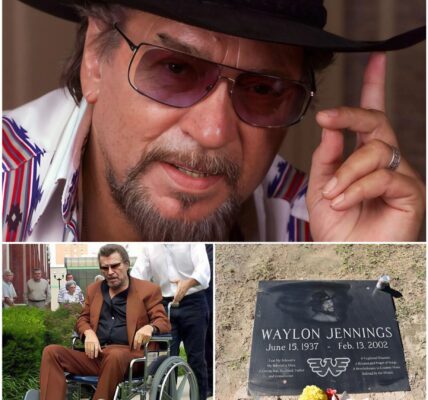

Waylon Jennings, Stripped Bare: A Moment of Outlaw Country at Its Most Human
An Acoustic Confession on Cowboy Jack Clement’s Stage
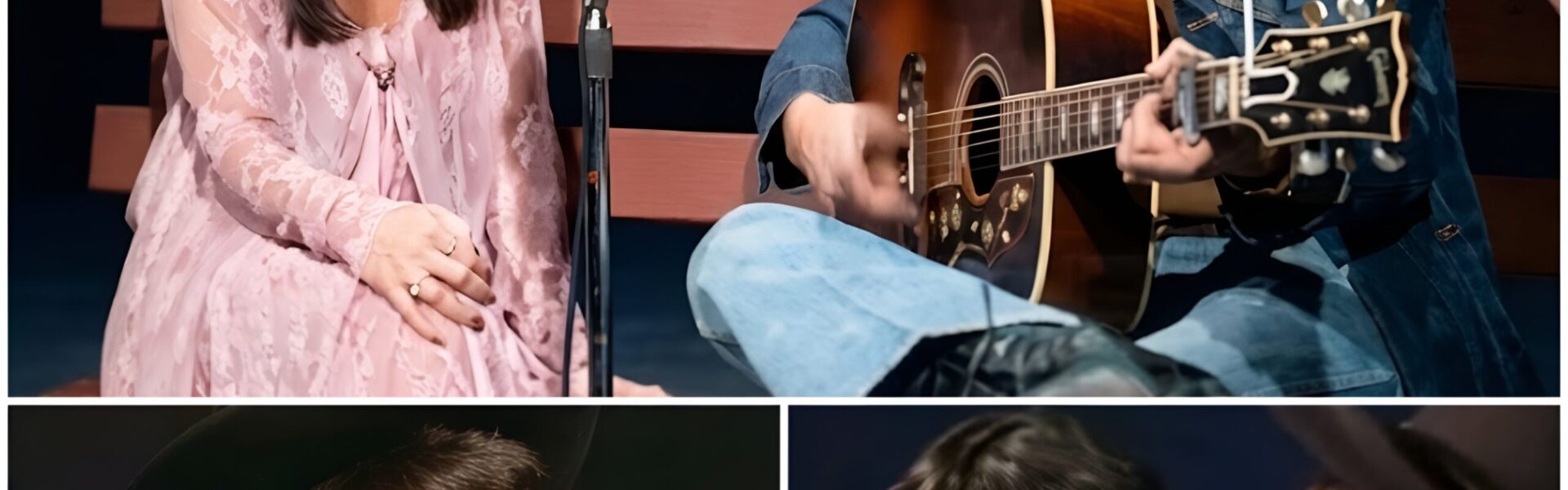
On Cowboy Jack Clement’s show, there were no flashing lights, no backing band, no need for spectacle. Waylon Jennings sat alone with an acoustic guitar, his voice roughened by years of hard miles and harder truths. It was a rare solo moment—one where nothing stood between the artist and the audience but wood, steel strings, and honesty. Every chord felt deliberate, every lyric an open door into a life lived on the road.
This wasn’t a performance built for perfection. It was built for truth.

The Power of Less
Waylon never needed excess. In this stripped-down setting, his songwriting carried the full weight of the room. The pauses mattered as much as the notes. His phrasing leaned into the imperfections of age and experience, turning them into strengths. You could hear the dust of highways, the late nights, the victories and regrets—all etched into his voice.
Without a band to cushion the sound, the stories stood exposed. And that exposure was the point.
A Voice That Lived the Lyrics
Waylon’s weathered baritone wasn’t just singing about life on the road—it was the road. Each line felt earned, delivered by someone who had walked every mile he described. The guitar playing was steady and unshowy, serving the song rather than competing with it. This was outlaw country in its purest form: defiant, intimate, and unapologetically real.
Listeners weren’t being entertained so much as invited to sit beside him.
A Private Smile, Shared Publicly

Then came the moment that changed the room. From off to the side, Jessi Colter—Waylon’s wife and creative partner—offered a soft, affectionate “yeah right.” It wasn’t scripted. It wasn’t performative. It was a private laugh that slipped into the public space, reminding everyone that even legends share inside jokes.
In that brief exchange, the myth of Waylon Jennings gave way to the man. A husband. A partner. Someone grounded by love as much as by rebellion.
Outlaw Country, Humanized
That single comment did more than break the tension—it humanized the entire moment. Outlaw country has always been about independence and resistance, but here it revealed its softer core: connection. The music wasn’t just about bucking the system; it was about surviving it together.
Waylon smiled, the audience felt included, and the songs carried on—now warmer, richer, more alive.

Why This Moment Endures
Decades later, this appearance still resonates because it captures something rare: authenticity without armor. No persona. No posturing. Just a man, his guitar, and the woman who knew him best. It’s a reminder that the greatest performances don’t always come from grand stages—they come from honesty.
In that quiet room on Cowboy Jack Clement’s show, Waylon Jennings didn’t just play outlaw country. He lived it.