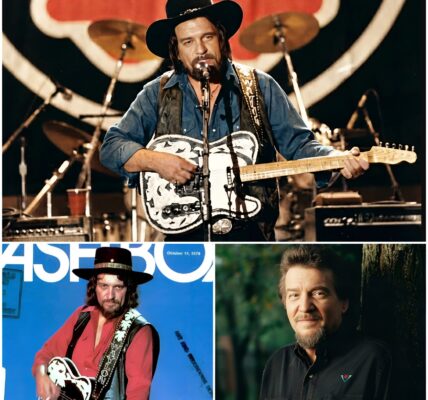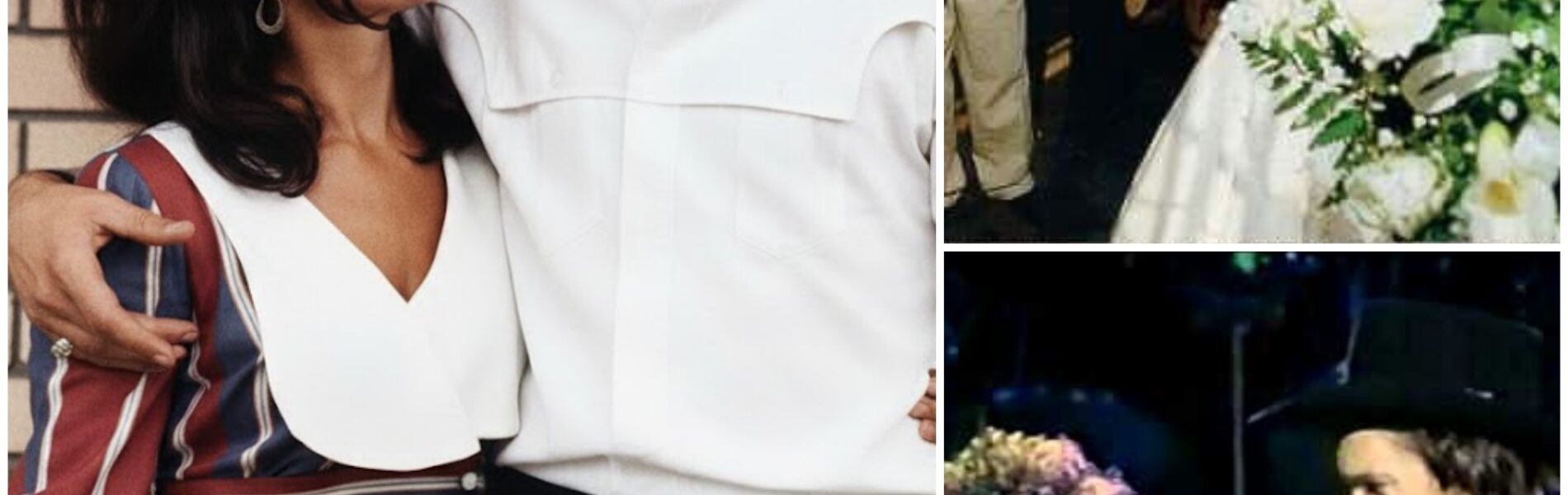
“Storms Never Last” — The Quiet Promise That Held Waylon Jennings and Jessi Colter Together

Waylon Jennings — The Story Behind “Storms Never Last”
When love becomes music, the result can last forever. In 1981, country
power couple Waylon Jennings and Jessi Colter released a duet version
of Colter’s own song “Storms Never Last” on their RCA album Leather
and Lace. The track quickly became one of the most sincere musical
portraits of enduring love in outlaw country history — a tender exchange
between two artists whose bond was both romantic and creative.

A Life Saved by Love
Long before the duet topped playlists, Waylon Jennings was fighting to
save himself. In a 1973 interview with Rolling Stone journalist Chet Flippo,
Waylon revealed he was at the lowest point of his life — emotionally
numb, constantly high, drowning in depression, and physically
deteriorating. He weighed just 138 pounds and described himself as
living in a haze of drugs and self-pity.
But in the darkness, he found his lifeline. “Jessi was the best thing that
ever happened to me,” he said. “Jess was the best thing that ever
happened to me.”
He made it clear that Colter didn’t just change his world — she saved it.
Born From a Tornado and a Caption
The heart of the song came from a moment of quiet inspiration. Jessi
Colter found the phrase “storms never last” printed under a photo in a
magazine while sitting in her doctor’s office. The image showed a home
destroyed by a tornado. The caption stopped her — not because of the
destruction, but because of the promise hidden in the words. To her, the
message reflected love’s resilience.
The storms around them — emotional, chaotic, uncertain — would
eventually pass. Their love, she believed, could outlast the winds.
That belief carried her through the rest of Waylon’’s life, even after his
passing in 2002.

Versions Before the Duet
“Storms Never Last”” was written and composed entirely by Jessi Colter
and first released in 1975 as the closing track on her album I’m Jessi
Colter. The original was reflective and poetic, a personal note at the end
of her own musical statement. Waylon later recorded a solo version in
1980 for his LP Music Man.
Colter did not appear on that recording, and Waylon originally ended the
track by mentioning her name directly in the lyrics. Colter asked him to
remove that personal reference, hoping to make the song more universal
— something listeners could project their own love stories onto.
Finally, in 1981, they recorded the song together — voices intertwined,
not just as partners, but as equals telling the same truth from both sides
of the road.
A Song With the Same Words, Different Weight
The lyrics never changed, but their meaning deepened each time
Jennings returned to the song. From Colter’s solo reflection in 1975, to
Waylon’s searching solo in 1980, to the emotional duet in 1981, the song
grew heavier with every new voice that carried it. And when Jennings
and Nelson later sang it together, it reached a new destination: No.
1on Billboard’s country singles chart — proof that a song doesn’t need
new lyrics to feel new. Sometimes, the world just needs to hear the truth
at the right moment.

A Favorite to Cover
The emotional honesty of the song inspired countless artists to reinterpret it in their own voices. Over the years, versions were released by Miranda Lambert, John Prine and Lee Ann Womack, David Allan Coe, David Allan Coe, Bruce Robison, Kelly Willis, Allison Moorer, and others. Each artist kept the heart of the song intact: storms fade, love stays.
Legacy of an Outlaw Love Song
“Storms Never Last” stands as one of the rare songs that became more meaningful as the years passed. It is not remembered for commercial ambition or lyrical reinvention, but for consistency — a reminder that love doesn’t always need to be perfect to be permanent.
Waylon and Jessi didn’t hide the storms. They sang through them.
And listeners believed every word.