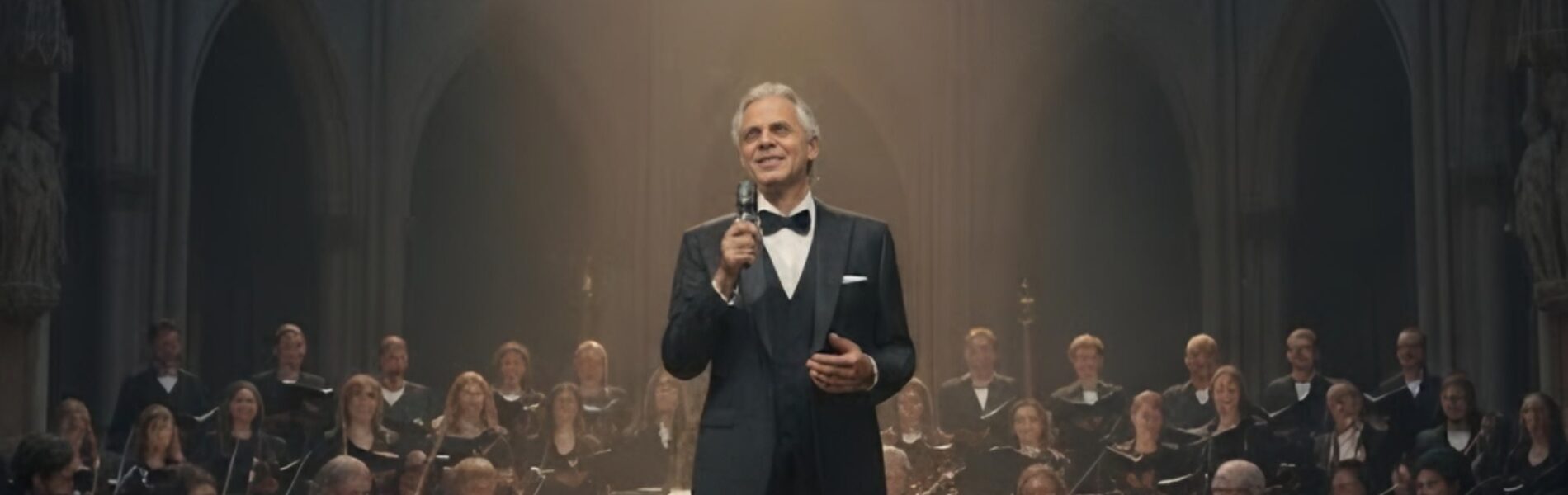

Andrea Bocelli’s frequent return to sacred music is not a career strategy, nor a nostalgic habit. It is a quiet homecoming. Again and again, after world tours, sold-out arenas, and collaborations with global pop stars, Bocelli finds himself standing beneath cathedral arches, singing prayers set to music. To many, this seems like a detour from mainstream success. To Bocelli, it is a return to the source of why he sings at all.
Sacred music was not something Bocelli discovered later in life. It was there from the beginning, woven into his childhood in Italy, where churches were not just places of worship but spaces of sound. The echo of hymns, the resonance of organs, and the human voice rising without amplification formed his earliest musical memories. Long before fame, sacred music taught him discipline, patience, and reverence. It trained him to listen to silence, to understand space, and to respect music as something larger than personal expression.
After losing his sight at a young age, Bocelli’s connection to faith deepened. Sacred music offered more than comfort; it offered structure in a world that suddenly felt uncertain. Singing in churches was not about performance or recognition. It was about presence. In those spaces, he did not need to be seen to be heard. The voice alone mattered. Over time, this shaped the way he approached all music, even outside religious contexts. Sacred repertoire became a foundation, grounding him when life felt unstable and reminding him that music could carry meaning beyond applause.

Even at the height of his global career, Bocelli never treated sacred music as a side project. Albums like Sacred Arias were not attempts to diversify his catalog, but expressions of gratitude and humility. While pop and opera performances brought him into stadiums and television broadcasts, sacred music returned him to intimacy. In a church, the relationship between singer and listener feels different. There is no demand to impress, only an invitation to reflect. Bocelli has often chosen these spaces because they strip away ego. The architecture humbles the performer. The music points upward, not inward.
There is also something deeply physical about singing sacred music that aligns with Bocelli’s artistry. Church acoustics are unforgiving yet generous. They expose flaws, but they also reward sincerity. Notes linger. Silence stretches. Breath becomes part of the composition. Bocelli understands this better than most. His voice, known for its warmth and vulnerability, blends naturally with sacred repertoire, where emotion is not dramatized but offered. In these settings, restraint is more powerful than force, and Bocelli’s instinct for balance finds its truest form.
Sacred music also allows Bocelli to step outside the pressures of modern performance culture. There are no charts to climb, no trends to follow, no expectation to reinvent himself. The music has already endured centuries. By returning to it, Bocelli places himself in a long human lineage rather than a competitive industry. He becomes one voice among many who have sung the same melodies in times of joy, fear, grief, and hope. This continuity offers him peace. It reminds him that his voice is temporary, but the music is not.
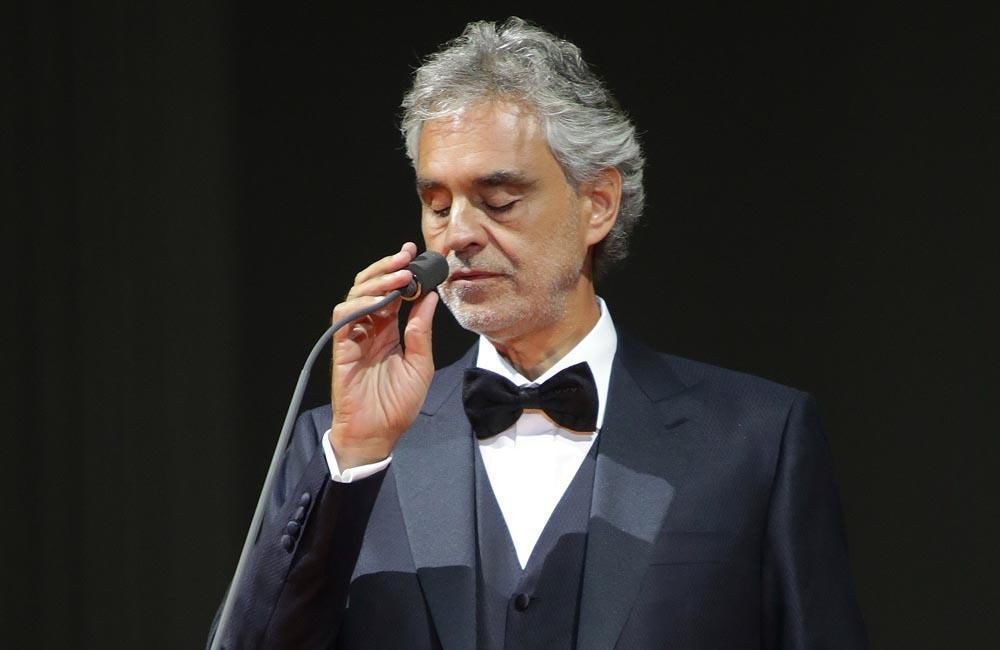
For Bocelli, singing in churches is also an act of service. Sacred music was never meant to belong solely to professionals or elites. It exists to accompany life’s most vulnerable moments: mourning, celebration, repentance, gratitude. By performing in sacred spaces, Bocelli aligns himself with music’s original social function. He is not there to dominate the room, but to support it, to give shape to emotions that words alone cannot carry. Many listeners describe these performances as deeply personal, even transformative, not because of virtuosity, but because of sincerity.
Faith, for Bocelli, is not about certainty, but trust. Sacred music reflects this tension. It holds doubt and devotion in the same breath. When he sings a prayer, he is not claiming answers. He is participating in a shared question. This humility resonates across cultures and beliefs. Even listeners who do not identify as religious often feel drawn to these performances because they touch something universal: the human need for meaning, comfort, and connection.
Ultimately, Bocelli returns to sacred music because it reminds him who he is when the stage lights fade. In churches, there is no distance between the artist and the man. The voice becomes a bridge between earth and something beyond it, whether one calls that God, hope, or silence. Sacred music does not demand that Bocelli be extraordinary. It only asks that he be honest. And in that honesty, his singing finds a depth that no arena, however grand, can replace.
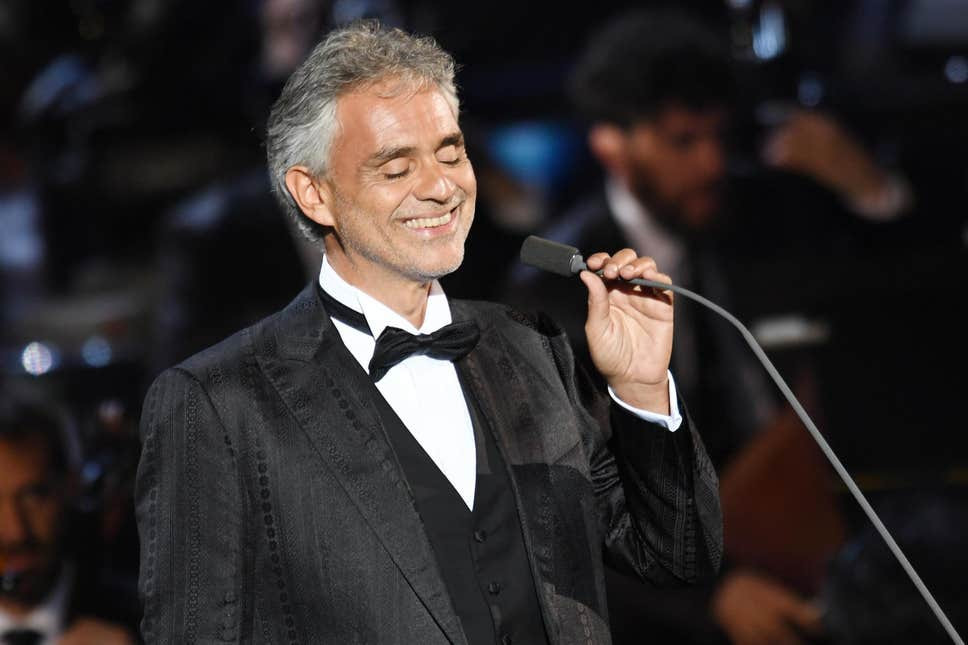
Each time Andrea Bocelli stands in a cathedral and lifts his voice, it is not a step backward into tradition, but a step inward. It is where his music began, where it remains most truthful, and where it continues to find its quiet power.
https://www.youtube.com/watch/T3vuTjvx0VY