
A Viral Debate on Art and Perspective: Tom Holland, Timothée Chalamet, and the Conversation Around Opera and Ballet

In the ever-evolving world of social media, it often takes just one comment to spark a widespread cultural conversation. Recently, that moment came when Timothée Chalamet made a remark during a town hall event that quickly went viral. In a lighthearted tone, he joked that opera and ballet were art forms that “no one cares about anymore.” While the comment may have been intended humorously, it didn’t take long for audiences online to react—and to bring another familiar name into the discussion: Tom Holland.
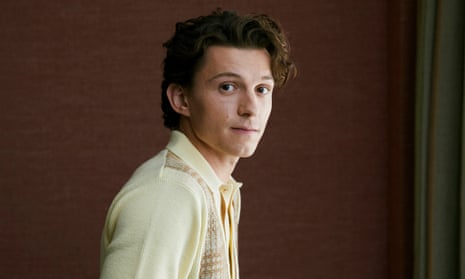
Almost immediately, older clips of Tom Holland began resurfacing across platforms. These videos date back to his early years, when he was performing as a child actor in the stage production of Billy Elliot the Musical. At the time, Holland was not yet a global film star, but a young performer deeply immersed in the world of dance and theatre—particularly ballet, which played a central role in the story of Billy Elliot.
What struck many viewers wasn’t just his talent at such a young age, but his perspective.
In interviews from that period, Holland spoke about ballet and performance with a level of maturity that surprised many people revisiting the footage today. He described the discipline, emotional depth, and storytelling involved in dance, emphasizing that it was far more than just movement—it was a form of expression that required dedication, strength, and passion. Even as a child, he seemed to understand the artistic and cultural significance of these forms.
:max_bytes(150000):strip_icc()/Tom-Holland-Tinfoil-Swans-FT-BLOG1024-61c62e18f089482490d6aff313fa5599.jpg)
As these clips began circulating again, fans quickly started drawing comparisons.
On one side was Timothée Chalamet, a modern Hollywood icon known for his charisma and range as an actor, making a casual, somewhat dismissive remark about traditional art forms. On the other was a young Tom Holland, speaking earnestly about the value of ballet and performance, highlighting their importance with sincerity and respect.
The contrast captured attention.
Social media users began sharing side-by-side clips, adding commentary, and engaging in debates about art, relevance, and generational perspectives. Some criticized Chalamet’s comment, interpreting it as dismissive of classical art forms that have shaped cultural history for centuries. Others defended him, arguing that his remark was clearly a joke and should not be taken too seriously.
Meanwhile, Holland’s resurfaced interviews were widely praised.
Many viewers expressed admiration for his thoughtful approach at such a young age. They noted how his early experiences in theatre likely influenced his outlook, giving him a deeper appreciation for forms of art that are sometimes overlooked in mainstream entertainment. For these fans, the comparison wasn’t about criticizing one actor, but about highlighting the enduring value of perspectives shaped by experience and exposure.
The conversation quickly expanded beyond the individuals involved.
At its core, the debate touches on a broader question: What place do traditional art forms like opera and ballet hold in modern culture?
For centuries, opera and ballet have been considered pillars of artistic expression. They combine music, movement, storytelling, and visual design into immersive experiences that reflect cultural heritage and human emotion. Yet in today’s fast-paced, digital-driven world, these art forms often compete with more accessible and widely consumed entertainment, such as films, streaming content, and social media.
This shift has led some to question whether traditional arts are losing relevance.
However, others argue that relevance should not be measured solely by popularity. Just because something is less visible in mainstream media does not mean it has lost its value. In fact, many believe that opera and ballet continue to thrive within dedicated communities, inspiring audiences and artists who appreciate their depth and complexity.

The reactions to Chalamet’s comment reflect this divide.
For some, his words echoed a broader sentiment that classical art forms struggle to connect with younger generations. For others, the backlash demonstrated that there is still a strong appreciation for these traditions—and a desire to defend them against dismissal, even when it comes in the form of humor.
Tom Holland’s early interviews added an interesting dimension to this discussion.
They serve as a reminder that exposure plays a crucial role in shaping perspective. As a young performer in Billy Elliot the Musical, Holland was immersed in a world where ballet was not just relevant, but essential. It was part of his daily life, his training, and his identity as an artist. Naturally, this environment influenced how he viewed and spoke about the art form.
Timothée Chalamet, on the other hand, comes from a different artistic background. His career has largely been rooted in film, and while he has certainly demonstrated respect for various forms of storytelling, his offhand remark reflects a different relationship with traditional arts.
This difference does not necessarily make one perspective right and the other wrong—but it does highlight how individual experiences shape the way people engage with culture.
Another important aspect of this situation is the role of social media in amplifying and reframing narratives.
In the past, a comment made at a town hall might have reached a limited audience. Today, it can be clipped, shared, and interpreted by millions within hours. Similarly, old interviews—like those of Tom Holland as a child—can be rediscovered and presented in new contexts, gaining fresh relevance years later.
This dynamic can create powerful moments of reflection, but it can also oversimplify complex ideas.
A short clip or quote rarely captures the full nuance of a person’s thoughts or intentions. Yet in the fast-moving environment of social media, these fragments often become the basis for broader judgments and comparisons.
Despite this, the current conversation has sparked meaningful engagement.
People are not just reacting to two actors—they are discussing the value of art, the importance of cultural preservation, and the ways in which different generations connect with creative expression. In that sense, the debate itself reflects something positive: a willingness to engage with ideas and question assumptions.
For fans of both Tom Holland and Timothée Chalamet, the moment serves as a reminder of the influence public figures have—not only through their work, but through their words.
It also underscores the enduring relevance of art in all its forms.
Whether through the elegance of ballet, the grandeur of opera, or the accessibility of modern film, artistic expression continues to shape how people understand the world and themselves. Each form offers something unique, and each has a place in the broader cultural landscape.
In the end, what began as a viral comment has become something more.
It is a conversation about perspective, appreciation, and the evolving relationship between tradition and modernity. And in bringing together voices from different backgrounds and generations, it highlights the richness—and complexity—of the world of art.