
The question has lingered quietly for months, but it refuses to disappear. As college basketball continues to navigate an era reshaped by courtrooms as much as by box scores, one issue keeps resurfacing around the Alabama Crimson Tide: Will the program be forced to vacate wins from games in which Charles Bediako played?
At first glance, the answer appears straightforward. The legal record is clear. Public statements from the NCAA itself appear unambiguous. And yet, the history of college athletics suggests that clarity does not always prevent controversy. What makes the Bediako case so significant is not simply the outcome for Alabama, but what it reveals about the shifting balance of power between courts, governing bodies, and athletes in modern college sports.

The origins of the eligibility dispute
Charles Bediako’s path to the Alabama lineup was never purely a basketball story. It became a legal one almost immediately. The NCAA questioned his eligibility, raising concerns rooted in its interpretation of amateurism rules and prior participation. Alabama, standing behind its player, challenged the association’s authority to restrict his ability to compete.
The matter escalated quickly. A court intervened, granting a temporary restraining order that allowed Bediako to play while the legal process unfolded. For Alabama, this ruling was decisive. The Crimson Tide proceeded with their season, winning games with Bediako in uniform, under the protection of a judge’s order.
That protection, however, was never meant to last forever.
What the temporary restraining order actually meant
The original TRO was unusually explicit. It did not merely permit Bediako to play. It restrained the NCAA from “threatening, imposing, attempting to impose, suggesting or implying any penalties or sanctions” against either the athlete or the University of Alabama as a result of his participation.
In practical terms, that language mattered. It meant Alabama was not acting in defiance of NCAA rules, but in compliance with a court order. The program was not exploiting a loophole. It was following the law as interpreted by a judge.
That distinction lies at the heart of the vacated-wins debate.
The expiration of the TRO and renewed speculation
The TRO is no longer viable. That fact alone has fueled speculation that the NCAA could revisit the case with punitive intent. Historically, vacated wins have been one of the association’s preferred tools when eligibility violations are later confirmed.
But history does not exist in a vacuum. The legal landscape surrounding college athletics has changed dramatically, and the Bediako case sits squarely in the middle of that transformation.
To vacate Alabama’s wins would require the NCAA to argue that the program gained an unfair competitive advantage by playing Bediako. That argument becomes difficult to sustain when a court explicitly authorized his participation.
Charlie Baker’s words and their weight
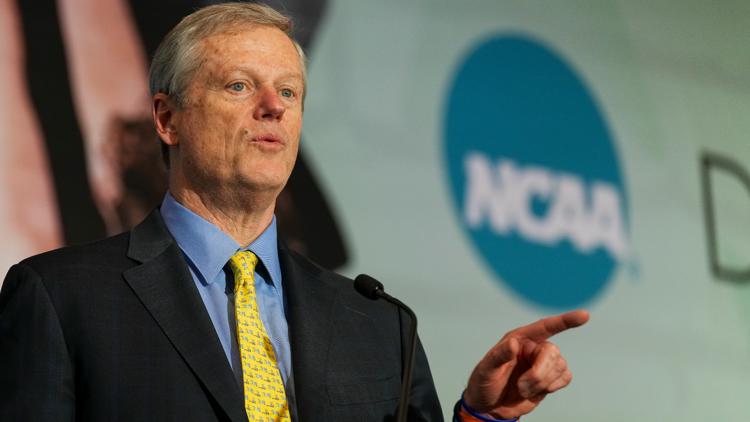
In an interview with Sports Illustrated, Charlie Baker, the NCAA’s president, addressed the broader principle at stake. His words were carefully chosen but unmistakable.
“For a lot of really good reasons,” Baker said, “people who lose in court can’t turn around and punish the people who won.”
That sentence resonated across college sports. It was not framed as a hypothetical. It was a recognition of legal reality. When an organization loses in court, attempting to impose retroactive punishment risks further legal consequences.
In the same article, Pat Forde wrote that despite the NCAA’s opposition to Bediako’s eligibility, the association is not in a position to sanction Alabama for playing him.
Taken together, those statements suggest a clear institutional understanding of the limits of NCAA authority in this case.

Vacated wins and the problem of precedent
The NCAA has vacated wins before. Entire seasons have been erased from record books. But those cases typically involved schools acting independently, later found to be in violation of NCAA rules.
The Bediako situation is fundamentally different. Alabama did not make a unilateral decision. It complied with a judicial order. To vacate wins now would effectively punish the university for obeying the law.
That creates a dangerous precedent. If schools can be penalized for following court rulings, the incentive structure collapses. Universities would be forced to choose between legal compliance and athletic self-preservation, an untenable position.
Why the NCAA’s leverage is weaker than before
The modern NCAA is not the NCAA of a decade ago. A series of court losses has steadily eroded its authority. Judges have shown increasing skepticism toward broad enforcement powers that restrict athlete participation without clear justification.
In this environment, the NCAA must calculate not only whether it can act, but whether it should. Vacating Alabama’s wins would almost certainly invite another legal challenge. And this time, the association would be defending a decision that contradicts both a prior court ruling and the public statements of its own president.
That is not a strong legal posture.

The athlete at the center of the storm
Lost in much of the debate is Bediako himself. Charles Bediako did not circumvent rules. He sought clarity. He went to court. He played under authorization. His performance on the court was not fraudulent. It was legitimate, sanctioned, and public.
To erase those games would be to retroactively declare his participation invalid, despite the fact that it was lawful at the time. That notion clashes with basic legal principles and undermines the credibility of the competition itself.
Alabama’s institutional position
From the perspective of the University of Alabama, the case is straightforward. The school followed a judge’s order. It protected its athlete. It competed in good faith.
If the NCAA were to vacate wins, Alabama would have a compelling argument that it is being punished not for wrongdoing, but for prevailing in court. That argument would likely find a receptive audience in the judiciary.
Why this case matters beyond Alabama
The implications extend far beyond one program. This case is a litmus test for how college sports will operate moving forward. If governing bodies can override court decisions through retroactive sanctions, the authority of the judiciary in sports disputes is weakened.
Conversely, if Alabama’s wins stand, it reinforces a new reality: legal rulings are not suggestions. They are binding, and athletic governance must adapt accordingly.
What happens next
While speculation will continue, all available evidence points in one direction. The NCAA vacating Alabama’s wins would amount to penalizing a school for complying with a judge’s ruling. That step would contradict public statements from NCAA leadership and invite further legal scrutiny.
In a time when the association is seeking stability, transparency, and reform, such a move would be counterproductive.
The likely outcome
The most reasonable conclusion is also the simplest. Alabama will not vacate wins from games Charles Bediako played in. The legal framework, institutional statements, and broader context all align against such an outcome.
This case will be remembered not as a scandal, but as a marker of transition. A moment when the balance between law and athletics shifted, and when the old mechanisms of punishment no longer fit the new reality.