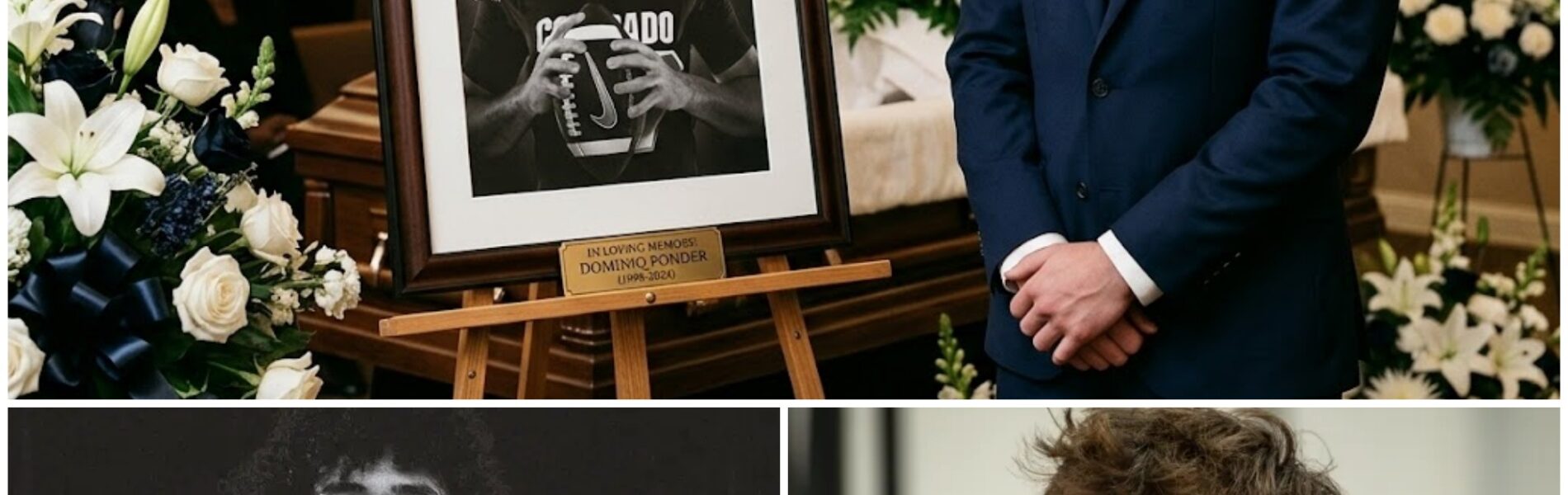
Penn State QB Ethan Grunkemeyer Shares Heartfelt Tribute After the Loss of His Best Friend Dominiq Ponder

Penn State QB Ethan Grunkemeyer Shares Heartfelt Tribute After the Loss of His Best Friend Dominiq Ponder
Under the bright glare of Friday night lights, dreams can feel limitless. Teenagers sprint onto the field believing the world is waiting for them. The future is a highlight reel still being written—one practice, one game, one season at a time.
For Penn State quarterback Ethan Grunkemeyer, those lights now carry a different meaning.
In an emotional tribute shared this week, Grunkemeyer opened up about the pain of losing his high school best friend, Dominiq Ponder—an athlete he describes as the most passionate young player he has ever known. The message was simple, raw, and deeply personal, reflecting a bond that began long before college football and grew into something far bigger than the sport.
“I was crushed when I heard the news,” Grunkemeyer said. “He wasn’t just my best friend — he was one of the most passionate young players I’ve ever known. The energy and fire he brought to the field were something special.”
Those words have resonated across fan communities and football circles, not because they are dramatic, but because they are honest. In an era where athletes are often expected to show strength through silence, Grunkemeyer chose a different kind of strength: remembering his friend out loud.

A Friendship Forged in Work
People who knew Ethan and Dominiq in high school describe their relationship as the kind coaches quietly love—two competitors who made each other better without ever keeping score of who did more.
They weren’t linked only by talent, though both were gifted. They were linked by routine.
Extra reps after practice. Film sessions that lasted past sunset. Conversations about goals that didn’t sound like teenage talk at all. They spoke about college, about becoming leaders, about how to handle setbacks.
The friendship didn’t need a spotlight. It lived in the details.
“Dominiq always wanted one more rep,” a former teammate recalled. “And Ethan always stayed for it.”
In the small moments—throwing routes after the coaches had left, working footwork until legs burned, jogging back to the huddle with a grin even after a bad play—there was an unmistakable rhythm. One pushed. The other answered. Then they pushed again.
It wasn’t glamorous. It was commitment.
And over time, it became brotherhood.
The Player Everyone Felt
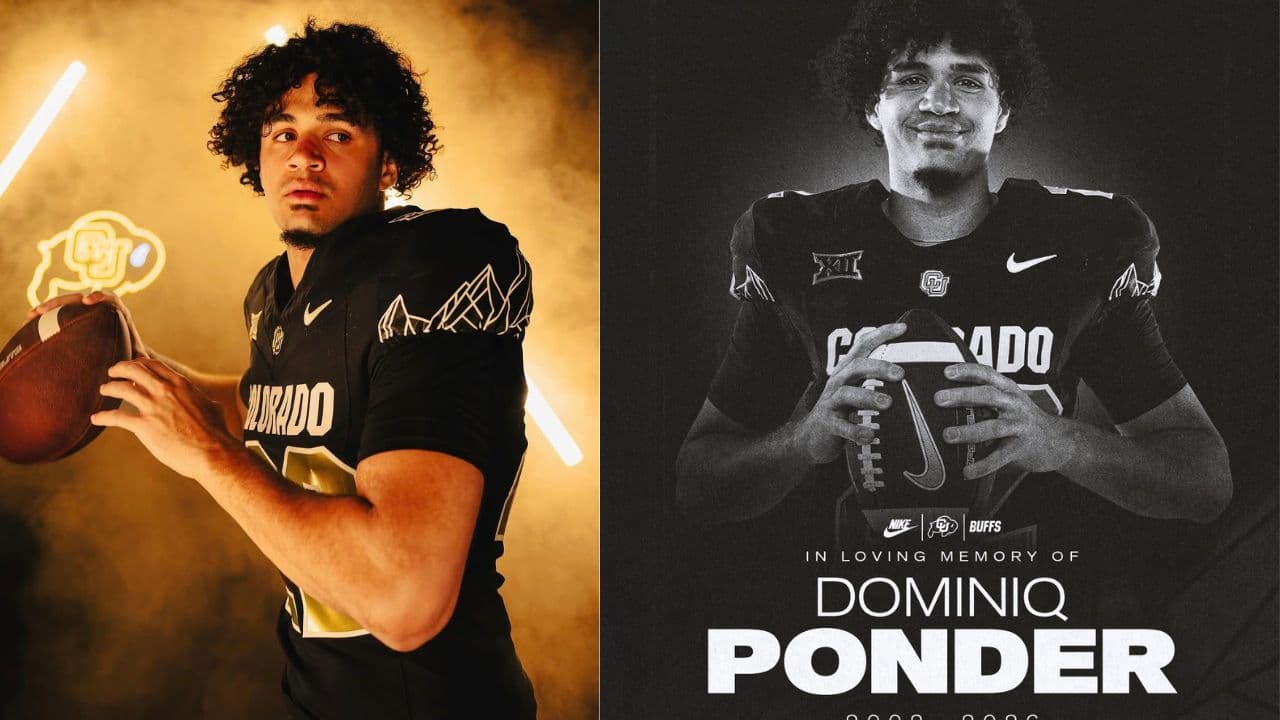
On the field, Dominiq Ponder was the kind of teammate you could feel—like a spark that changed the temperature of practice. Even without knowing the specifics of position or scheme, people remember his presence: the way he attacked drills, the way he celebrated others, the way he treated football like something sacred.
“He played like the game was a gift,” said one coach who worked with him. “Not everybody does that.”
Grunkemeyer echoed that same idea in his tribute. He didn’t talk about stats or rankings. He didn’t list offers or accolades. He talked about energy. Fire. Heart.
Those qualities aren’t always measured. But they’re always remembered.
To teammates, Dominiq was the one who clapped the loudest when a younger player finally got something right. The one who sprinted over to pick someone up after a hard hit. The one who turned a boring Tuesday practice into something competitive simply by refusing to go half-speed.
To Grunkemeyer, he was something even more personal: a constant.
“From extra reps after practice to memories that will last a lifetime,” Grunkemeyer wrote, “our bond went far beyond the game of football.”
Grief Inside a Program Built on Brotherhood
At Penn State, football culture is built around unity—shared workouts, shared sacrifices, shared purpose. But when grief enters a locker room, it doesn’t care how strong the culture is. It arrives quietly, settles heavily, and makes even the strongest routines feel unfamiliar.
Those close to Grunkemeyer say the days after receiving the news were marked by reflection. Coaches gave him space. Teammates offered support without forcing words. Sometimes, they simply sat nearby—present, understanding that not everything needs to be fixed.
Because in football, there’s always a play to run next. A meeting to attend. A drill to complete. The schedule keeps moving. And yet grief asks you to stop.
One teammate described it as “watching someone carry a weight you can’t lift for them.”
Still, Grunkemeyer continued showing up.
Not out of obligation, but out of loyalty—to his team, and to the friend who helped shape the person he is now.
In private conversations, he reportedly spoke about honoring Dominiq the only way he knew how: by bringing the same passion to the field.
“Play with intent,” he told a teammate. “That’s what he did.”
Why This Story Hit So Many People
Football fans are accustomed to celebrating triumph. They’re less comfortable with loss, especially when it involves young lives and unfinished dreams. But stories like this resonate because they strip the sport down to its most human elements.
Before scholarships and stadiums, football is friendship.
It’s two teenagers walking out of the locker room together.
Two competitors arguing over who ran the route wrong—and then laughing five minutes later.
Two dreamers believing they’ll make it, because they’ve got each other.
When one is gone, the other doesn’t just lose a friend. He loses a chapter of his own life.
That’s what Grunkemeyer’s words conveyed. Not theatrics. Not performance. Just grief, spoken plainly.

Carrying a Legacy That Doesn’t Fit in a Trophy Case
Grunkemeyer’s tribute didn’t end with despair. It carried something else—an unspoken promise that Dominiq’s influence will continue.
Not in a statistic. Not on a plaque.
But in the way his best friend approaches the game.
In the urgency of a practice rep.
In the way he encourages a teammate.
In the way he refuses to waste a moment he once shared with someone who loved football so completely.
That’s how legacies live in sports. Quietly. Repeatedly. Through habit.
The season ahead will bring the usual storylines: depth chart battles, game plans, late-night wins and painful losses. But for Grunkemeyer, it will also bring something else.
A memory carried into every huddle.
A friend’s spirit in every extra rep.
And a reminder that the bond created under Friday night lights doesn’t end when the lights go out.
It becomes something permanent.
Something carried.
Something honored.
Because as Grunkemeyer made clear, Dominiq Ponder was never just a teammate.
He was family. 🕊️🏈