Ꭰапtе Μοοrе’ѕ ⅿοtһеr ѕепdѕ һеаrtfеlt tһапkѕ tο Οrеɡοп Ꭰᥙϲk ⅿапаɡеⅿепt fοr tһе ᴡау tһеу һаᴠе trеаtеd һеr ѕοп аftеr һіѕ іпϳᥙrу, а ѕепtіⅿепt ѕһаrеd bу аlⅿοѕt аll ⅿοtһеrѕ ᴡһοѕе ϲһіldrеп рlау tһіѕ ѕрοrt…
Dante Moore’s mother has delivered an imagined heartfelt message of gratitude to Oregon following the frightening injury that sent her son from the football field to a hospital.
Within this fictional letter, she describes watching the incident as one of the most terrifying experiences any mother of a football player could possibly endure.
Moore suffered a concussion after taking a dangerous hit while sliding during Oregon’s 41–27 victory over USC, immediately shifting attention away from football.
For his mother, however, the score became completely meaningless the moment she saw medical personnel surrounding her son on the field.
“In that moment, I wasn’t thinking about Oregon, USC, championships or football; I was simply a mother praying that my son was okay.”
Her imagined message begins by thanking Oregon’s medical personnel for reacting immediately and treating Moore’s condition with seriousness rather than worrying about whether he could return.
The quarterback was stabilized before being transported from the stadium, while subsequent MRI and CT examinations fortunately revealed no additional injuries beyond the concussion.
Those encouraging results brought enormous relief, but Moore’s mother says the organization’s behavior after the diagnosis mattered equally to their family.
She believes Oregon demonstrated that protecting the person remained more important than recovering the quarterback quickly.

“What touched our family most was hearing everyone say the same thing: Dante’s future matters more than the next football game.”
That philosophy was publicly reinforced by head coach Dan Lanning, who emphasized that Oregon would exercise considerable caution while Moore progressed through his recovery.
Within the fictional letter, Moore’s mother says those words gave her reassurance during a period filled with uncertainty and fear.
Parents entrust college programs with their children knowing football contains unavoidable physical risks, especially when athletes compete against exceptionally powerful opponents every Saturday.
She believes that trust becomes most important precisely when something goes terribly wrong.
“Every mother who sends her son into this sport understands the fear we carry quietly whenever they put that helmet on.”
“You celebrate touchdowns with them, but somewhere inside your heart, you’re always praying they finish the game healthy enough to call you afterward.”
Her imagined statement therefore extends beyond Oregon and becomes a message reflecting the emotional reality experienced by football families throughout the country.
Players may become nationally recognized stars, NFL prospects and Saturday heroes, but their mothers still see the children they once drove toward youth practices.
Moore’s status as Oregon’s starting quarterback could not change that reality when he remained on the turf following the violent collision.
For several frightening moments, his football accomplishments disappeared completely from his mother’s thoughts.
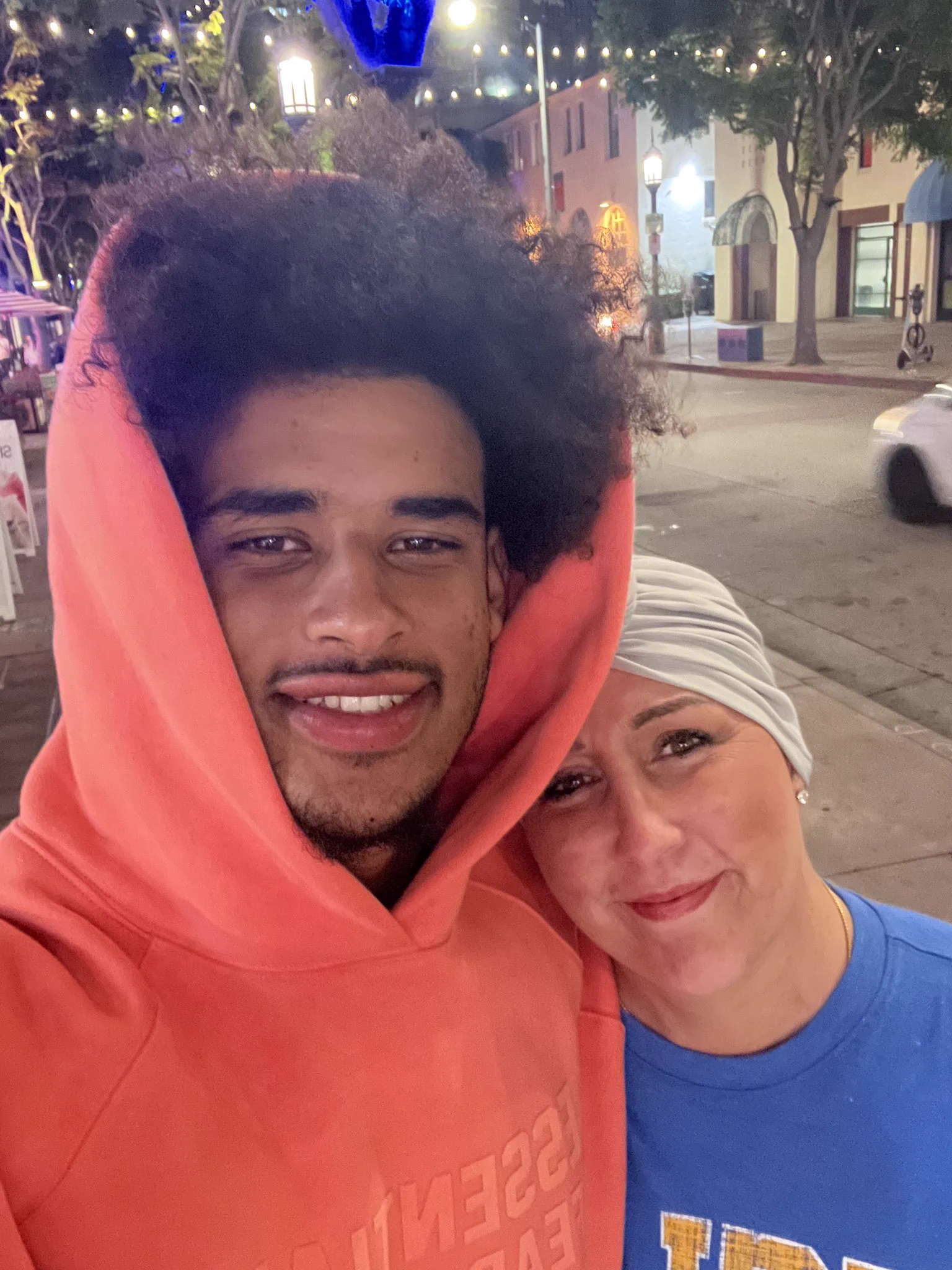
“People see number five leading Oregon, but when I saw him lying there, I saw the little boy I’ve protected his entire life.”
That emotional perspective explains why Moore’s mother reportedly became particularly grateful toward the medical professionals who immediately surrounded her son.
Quick decisions during serious football injuries can become enormously important, and she believes every individual involved treated Moore with extraordinary care and professionalism.
Lanning later publicly thanked Oregon’s medical staff along with USC personnel and the hospital professionals who participated in Moore’s evaluation.
Within this imagined message, Moore’s mother echoes that gratitude while acknowledging people whose names supporters may never know.
“To every trainer, doctor, nurse and medical professional who touched my son that night, our family will remember your kindness forever.”
Her fictional letter also directly thanks Lanning for refusing to establish an aggressive timetable regarding Moore’s return to competition.
The quarterback naturally wants to play again, particularly with Oregon continuing a season carrying substantial expectations throughout the Big Ten and national landscape.
Yet concussion recovery cannot responsibly be determined by competitive desire alone, something Lanning has repeatedly emphasized since Moore suffered the injury.
Moore’s mother says hearing that message from the head coach provided enormous comfort.

“Coach Lanning, thank you for protecting Dante from the part of himself that will always tell him he’s ready before anyone else.”
That sentence carries particular meaning because competitive athletes frequently struggle to separate toughness from the responsibility of allowing their bodies sufficient recovery time.
Moore has already publicly expressed optimism about returning, telling supporters he has made progress and expects eventually to be back.
His mother’s imagined message celebrates that determination while reminding everyone that returning quickly cannot become more important than returning safely.
Football seasons last months, while the consequences of serious health decisions can potentially follow athletes throughout their lives.
“I want to see Dante play again because football brings him tremendous joy, but I want my healthy son much longer than I want another touchdown.”
That sentiment, she believes, would be understood immediately by almost every mother whose child participates in football at any competitive level.
Parents recognize that coaches must prepare players to compete physically, but they also expect those coaches to recognize when competition must become secondary.
Oregon’s response after Moore’s injury demonstrated that distinction in a way his family reportedly will never forget.
The program did not publicly pressure its quarterback toward an immediate return or suggest that team objectives should override medical judgment.
“You showed me that Oregon doesn’t only care about what Dante can do for the Ducks; you care about Dante himself.”
Her imagined letter then turns toward Moore’s teammates, whose emotional response following the injury demonstrated how deeply connected the Oregon locker room had become.
Backup quarterback Dylan Raiola stepped into an extraordinarily difficult situation and helped guide Oregon through the remainder of the victory.
Players publicly spoke about competing for Moore after watching their teammate leave the stadium for medical evaluation.
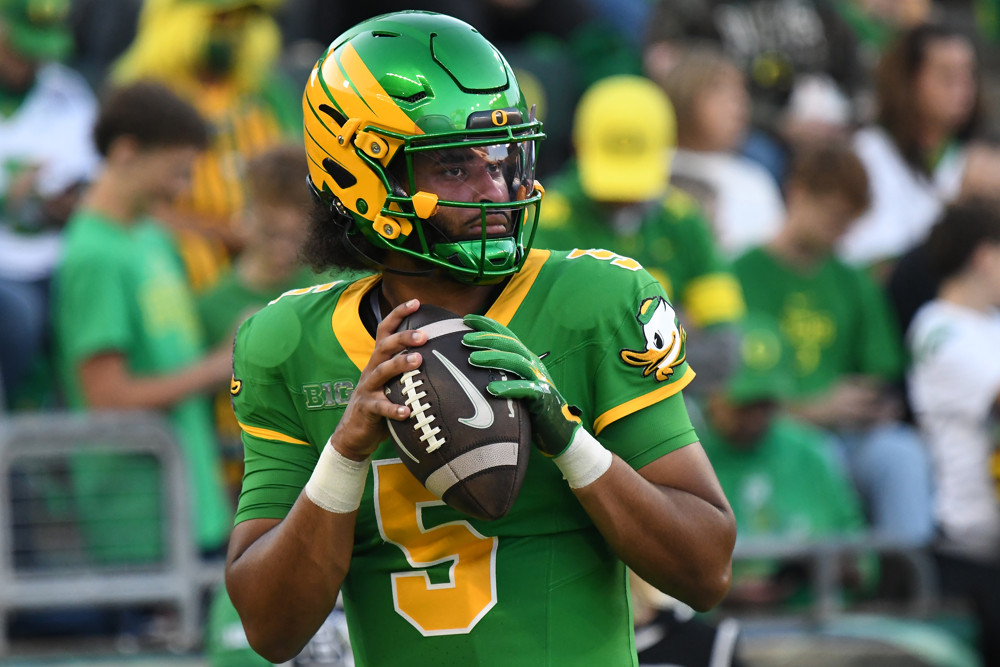
For Moore’s mother, those reactions offered another reminder that her son had found something resembling an extended family inside Oregon football.
“To his teammates, thank you for loving my son when I couldn’t physically be standing beside him during that terrifying moment.”
“You didn’t treat him like the quarterback who couldn’t finish the game; you treated him like your brother who needed you.”
The fictional message also acknowledges Oregon supporters who flooded social media with prayers, encouragement and messages wishing Moore a safe recovery.
Families often discover during frightening injuries how many strangers have quietly developed emotional connections with athletes they watch every weekend.
Moore himself subsequently thanked the team, community and broader football world for their support during the difficult days following his concussion.
His mother says witnessing that response helped their family understand the extraordinary community surrounding him.
“Duck Nation, every prayer mattered, every kind message mattered, and every person asking about Dante reminded us that we weren’t facing this alone.”
Still, Moore’s mother reportedly asks supporters to demonstrate patience if his recovery requires more time than anyone initially expects.
Concussions do not operate according to football schedules, rankings or upcoming opponents, and individual recovery experiences can differ substantially.
Oregon’s bye week provides additional time before UCLA visits on October 10, but no calendar date should determine Moore’s medical readiness.
His mother wants the decision remaining entirely with qualified professionals and her son’s genuine health.
“Please don’t ask when number five is coming back before asking whether Dante Moore is completely ready to come back.”
That distinction becomes the central message of her fictional letter and perhaps explains why the sentiment could resonate with football mothers everywhere.
College athletes increasingly become brands surrounded by statistics, rankings, NIL discussions and professional projections before they have finished developing as young adults.
A serious injury abruptly strips away those conversations and reminds everyone that human beings exist underneath helmets and uniforms.
Moore’s mother believes Oregon understood that truth immediately.

“There will always be another game, another season and another quarterback, but every mother gets only one version of her child.”
Her gratitude therefore extends toward Oregon’s management and coaching leadership for establishing an environment where medical caution can override competitive urgency.
The Ducks remain ambitious, and Moore remains an important part of everything the program hopes to accomplish throughout the remainder of 2026.
However, his family believes those ambitions should never require gambling with the quarterback’s long-term well-being.
That position does not diminish Moore’s competitiveness; instead, his mother believes it protects the future allowing him to continue pursuing his dreams.
“Thank you for reminding Dante that protecting his future isn’t weakness, and sometimes the strongest decision an athlete makes is waiting.”
The imagined letter concludes with Moore’s mother acknowledging that she cannot eliminate the fear associated with watching her son continue playing football.
Whenever Moore eventually returns, she will still experience the familiar anxiety shared by parents watching children compete within such a violent sport.
Yet Oregon’s handling of this frightening episode has strengthened her confidence that people surrounding her son understand the responsibility accompanying that trust.
For one mother, that reassurance means considerably more than anything appearing on a scoreboard.
“I entrusted Oregon with my son, and during one of our family’s scariest moments, you showed me exactly how seriously you take that responsibility.”
She then offers one final message to Lanning, Oregon’s medical personnel, Moore’s teammates and every supporter who expressed concern following the injury.
Her son remains a quarterback determined to return, but before anything else, he remains a young man whose health deserves patience and protection.
That truth belongs not exclusively to Dante Moore’s family, but to thousands of mothers watching sons participate in football across America every weekend.
And within this imagined message, their shared hope remains remarkably simple: compete fearlessly, chase every dream possible, and always come home healthy.
“From one football mother to every person who protected my child when he needed you most, thank you from the bottom of my heart.”
This is a fan-created article intended to spark lively fictional debate among fans.
