❄️💀 EIGHT STRANGERS. ONE CABIN. AND A DEADLY SECRET WAITING TO BE EXPOSED.
THE PRESSURE COOKER OF DECEIT: Why Quentin Tarantino’s The Hateful Eight Remains His Darkest, Most Claustrophobic Masterpiece
By Staff Writers
Published: October 21, 2026
LOS ANGELES — When Quentin Tarantino announced that his eighth feature film would return to the Western genre following the critical and commercial triumph of Django Unchained (2012), cinema lovers anticipated another sweeping, explosive revenge epic across the sun-drenched American South. Instead, Tarantino delivered the exact opposite: an intimate, deeply cynical, and delightfully claustrophobic murder mystery disguised as a post-Civil War Western.

Released in late 2015 with grand 70mm roadshow presentations, The Hateful Eight is perhaps Tarantino’s most uncompromising, theater-like cinematic creation. By trapping eight venomous, morally bankrupt strangers inside a snowbound stagecoach lodge during a roaring blizzard, Tarantino constructed a tension-filled pressure cooker where paranoia reigns supreme, truth is a commodity, and nobody is who they claim to be.
The Setup: Minnie’s Haberdashery as a Stage
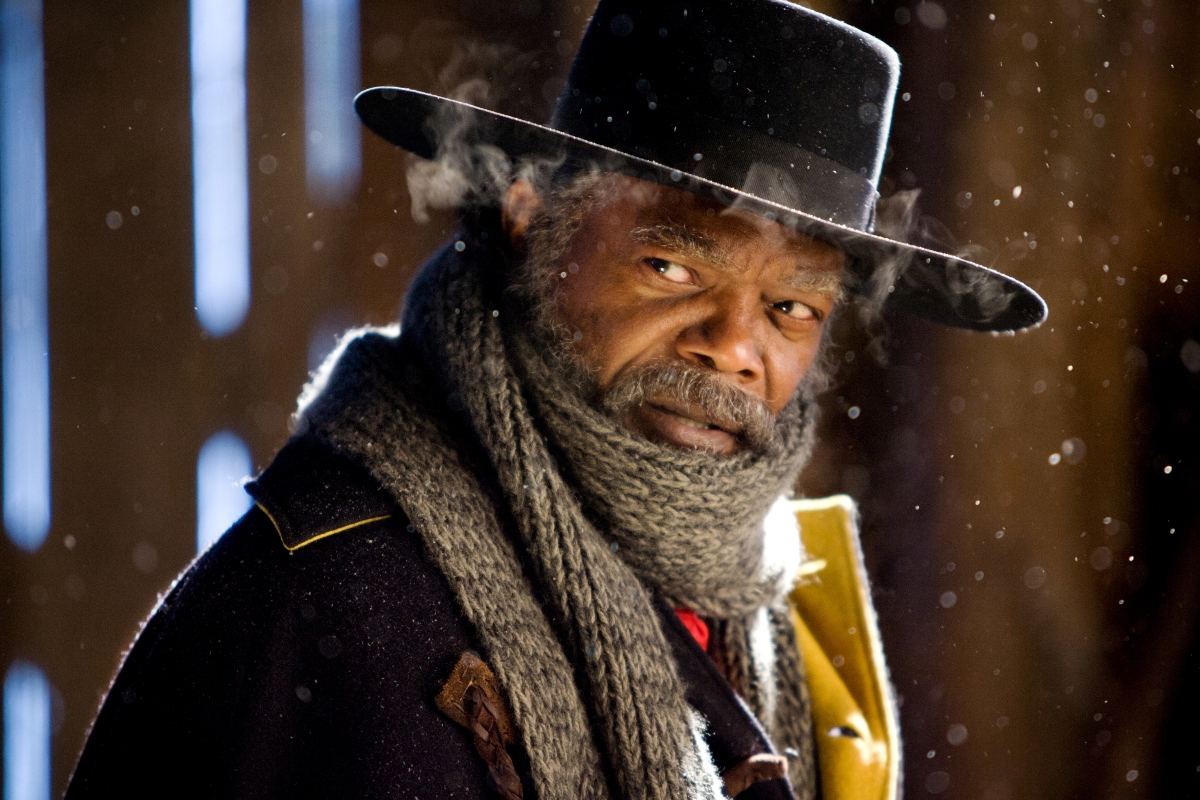
Set several years after the American Civil War in the freezing wilderness of Wyoming, the narrative begins aboard a stagecoach racing against an impending blizzard. Major Marquis Warren (Samuel L. Jackson), a notorious Union officer turned bounty hunter carrying three frozen corpses, hitches a ride with John “The Hangman” Ruth (Kurt Russell). Ruth is guarding his prized captive, Daisy Domergue (Jennifer Jason Leigh), a wanted fugitive with a $10,000 bounty on her head, whom he intends to see hanged in the town of Red Rock.
Along the treacherous trail, they pick up Chris Mannix (Walton Goggins), a renegade former Confederate soldier claiming to be the newly appointed sheriff of Red Rock. Forced to seek shelter from the blizzard, the party arrives at Minnie’s Haberdashery, a remote mountain pass-stop. However, Minnie and her staff are nowhere to be found. Instead, four unknown men are already inside:

-
Bob “The Mexican” (Demián Bichir): Claiming to be looking after the lodge while Minnie is away.
-
Oswaldo Mobray (Tim Roth): The polite, English executioner of Red Rock.
-
Joe Gage (Michael Madsen): A quiet cowboy claiming to be traveling home to visit his mother for Christmas.
-
General Sanford Smithers (Bruce Dern): A bitter, aging Confederate general resting by the fireplace.
Once the doors are nailed shut against the howling gale outside, Ruth realizes that one or more of these men are in league with Daisy to free her—and he intends to keep everyone under close watch until the storm passes.
A Post-Civil War Crucible of Hate

While The Hateful Eight functions mechanically as an Agatha Christie-style whodunit cross-pollinated with John Carpenter’s The Thing (1982), its ideological core is a biting, unsparing dissection of racial hatred, regional division, and post-war trauma in 19th-century America.
Every character in Minnie’s Haberdashery carries the scars—both literal and figurative—of the Civil War. Major Warren’s presence as a black Union officer holding absolute power over white captives instantly inflames the racial animosity of Mannix and General Smithers. The dialogue does not shy away from the poisonous, unvarnished hatred of the era; instead, Tarantino weaponizes language, using verbal spars to build an agonizing level of psychological dread long before the first gunshot is fired.
In this confined space, democracy and law do not exist. Justice is dictated entirely by the length of a barrel and the willingness to pull the trigger first.
Ennio Morricone and the Sound of Dread
One of the greatest achievements of The Hateful Eight is its original score, composed by the legendary Ennio Morricone. Having scored scores of iconic Spaghetti Westerns throughout the 1960s and 70s, Morricone agreed to compose his first full original Western score in over 30 years for Tarantino.
Rather than delivering the sweeping, heroic trumpet fanfares of The Good, the Bad and the Ugly, Morricone created a haunting, dissonant, and sinister soundscape driven by low bassoons, eerie brass, and ominous strings. The score reflects the relentless, mechanical ticking of a bomb waiting to explode. Morricone’s work earned him his first competitive Academy Award for Best Original Score, providing the film with its chilling emotional heartbeat.
Masterclass Performances in a Single Room
To make a three-hour film set almost entirely in a single room succeed, a director relies heavily on the caliber of their ensemble cast. Every member of Tarantino’s “hateful” ensemble delivers career-defining work:

-
Samuel L. Jackson: Serving as the film’s de facto detective, Jackson gives one of his richest, most commanding performances, balancing calculating intellect with terrifying coldness.
-
Jennifer Jason Leigh: As Daisy Domergue, Leigh delivers a feral, unhinged, and fearlessly physical performance that earned her an Oscar nomination. Beaten, bruised, and covered in blood for most of the runtime, she remains the most dangerous mind in the room.
-
Walton Goggins: Providing a brilliant arc from ignorant, racist provocateur to an unlikely partner in survival, Goggins steals nearly every scene he is in with his wild-eyed intensity.
Combined with Robert Richardson’s stunning Ultra Panavision 70mm cinematography—which turns the wooden beams and flickering firelight of Minnie’s Haberdashery into an epic canvas—the film feels grand despite its claustrophobic boundaries.
The Bleak Legacy of Tarantino’s Eighth

Unlike Tarantino’s more triumphant tales of historical revenge like Inglourious Basterds or Django Unchained, The Hateful Eight offers no neat catharsis or morally pure heroes. It is a bleak, violent, and darkly comedic study of human nature at its absolute worst.
Yet, as the blood dries on the floorboards and the storm rages outside, the film’s final moments achieve a strange, poetic irony. Two men from opposing sides of a brutal war find brief, bloody solidarity in the face of deception. Over a decade after its release, The Hateful Eight stands tall as a masterwork of suspense, dialogue, and atmospheric horror—a testament to Tarantino’s singular ability to turn a snowbound cabin into an unforgettable cinematic battlefield.
