Escorting a ruthless outlaw to the 3:10 train to Yuma, he faces deadly gunmen, betrayal, and a battle between fear and courage.
3:10 to Yuma (2007) Review: A Gripping Western About Courage, Morality, and Redemption
Introduction
In an era when Western films often rely on familiar images of dusty towns, gunfights, and fearless gunslingers, 3:10 to Yuma (2007) distinguishes itself through its intense psychological conflict, morally complex characters, and emotionally powerful storytelling. Directed by James Mangold, the film is a remake of the 1957 Western of the same name, originally directed by Delmer Daves and based on a short story by Elmore Leonard. Starring Christian Bale and Russell Crowe, the movie transforms a seemingly straightforward prisoner escort into a gripping examination of courage, desperation, loyalty, and the difficult choices people make when survival is at stake.
Rather than presenting a simple battle between good and evil, 3:10 to Yuma explores the uncertain boundaries between heroism and villainy. Its central characters are neither entirely virtuous nor completely irredeemable. Instead, they are shaped by personal failures, conflicting ambitions, and the desire to prove something to themselves and the people around them. The result is a Western that combines traditional genre elements with the emotional depth and narrative tension of a modern character drama.

A Desperate Mission in the American West
The story follows Dan Evans, a struggling rancher played by Christian Bale, who finds himself trapped beneath the weight of financial hardship and family disappointment. Living in a harsh frontier environment, Dan struggles to maintain his land and provide for his wife, Alice, and their two sons. His circumstances have gradually eroded his confidence, leaving him feeling powerless in his own household and community.
Dan’s life takes a dramatic turn when he becomes involved in the capture of Ben Wade, a notorious outlaw portrayed by Russell Crowe. Wade is charismatic, intelligent, and dangerous, leading a gang responsible for a series of violent robberies. Following his arrest, authorities must transport him to Contention City, where he can be placed on the 3:10 train to Yuma Territorial Prison.
Dan volunteers to help escort Wade to the train, accepting a dangerous assignment in exchange for desperately needed money. What initially appears to be a practical decision soon becomes a test of character. As Wade’s gang pursues the escort party and the journey grows increasingly perilous, Dan must confront not only the threat posed by the outlaw but also his own fears and insecurities.
The film’s central conflict is compelling because the mission represents much more than the delivery of a prisoner. For Dan, it becomes an opportunity to reclaim his dignity and demonstrate to his family that he possesses the courage and determination they have begun to doubt.

Christian Bale’s Powerful Performance as Dan Evans
Christian Bale delivers a deeply convincing performance as Dan Evans, portraying a man whose quiet desperation conceals an enduring sense of responsibility. Unlike the traditional Western hero who confidently confronts danger, Dan is physically vulnerable, emotionally exhausted, and painfully aware of his limitations.
Bale communicates these qualities through subtle expressions, restrained dialogue, and the character’s increasingly determined actions. Dan does not suddenly transform into an invincible gunslinger. Instead, his courage develops gradually as he recognizes that doing the right thing may require him to endure fear rather than overcome it completely.
One of the film’s greatest strengths is its treatment of masculinity. Dan’s struggles are not limited to external threats; he is also fighting the belief that he has failed as a husband and father. His relationship with his eldest son, William, becomes particularly important because the boy has begun to admire the confidence and independence associated with Ben Wade.
Dan understands that his son sees him as weak, and this realization intensifies his determination to complete the mission. His journey therefore becomes an attempt to redefine what strength means. Through Bale’s performance, the film suggests that genuine courage is not necessarily demonstrated through physical dominance but through persistence, sacrifice, and the willingness to accept responsibility.
Russell Crowe’s Charismatic and Dangerous Outlaw
Russell Crowe brings extraordinary complexity to Ben Wade, creating a villain who is simultaneously threatening, entertaining, and strangely sympathetic. Wade is a professional criminal who kills without hesitation when circumstances demand it, yet he possesses a sharp intelligence, a dark sense of humor, and an unsettling ability to understand other people.
Crowe avoids turning Wade into a one-dimensional antagonist. His character can be charming in one moment and terrifying in the next, keeping both the other characters and the audience uncertain about his intentions. His calm demeanor often makes him more intimidating than a conventional villain who relies on constant displays of aggression.
The dynamic between Wade and Dan is the film’s emotional and philosophical center. Wade recognizes Dan’s vulnerabilities and repeatedly attempts to exploit them, yet he also develops a degree of respect for the rancher’s determination. Their conversations reveal contrasting attitudes toward freedom, morality, and personal identity.
Wade appears to possess the freedom Dan desperately wants, moving through the world without being constrained by conventional expectations. However, his independence is sustained by violence and selfishness. Dan, meanwhile, is burdened by responsibility but gradually discovers a deeper form of personal freedom through his willingness to stand by his principles.
The tension between these two men gives the film much of its lasting impact.

Direction, Cinematography, and Atmosphere
Director James Mangold demonstrates a strong understanding of the Western genre while bringing a contemporary sense of urgency to the material. The film’s pacing allows its characters to develop naturally, but the narrative never loses sight of the danger surrounding the mission.
The cinematography emphasizes the unforgiving beauty of the American frontier. Vast landscapes, isolated settlements, rugged mountains, and dusty streets create a world in which survival often depends on strength, judgment, and luck. These environments are not merely decorative backgrounds; they reinforce the characters’ isolation and the moral uncertainty of their circumstances.
The visual style balances sweeping Western imagery with intimate moments of tension. Close-up shots capture the smallest changes in expression, particularly during conversations between Dan and Wade, while wider compositions highlight the vulnerability of the escort party against the immense landscape.
The action sequences are equally effective. Gunfights are sudden, brutal, and consequential rather than glamorous displays of skill. Violence frequently produces fear and confusion, reminding viewers that the characters inhabit a world where a single mistake can have irreversible consequences.
Marco Beltrami’s musical score further strengthens the atmosphere. Its combination of traditional Western influences and increasingly intense orchestration supports the film’s emotional progression, building suspense without overwhelming the performances.

Themes of Honor, Sacrifice, and Redemption
At its heart, 3:10 to Yuma is a story about the meaning of honor. Dan’s decision to escort Wade challenges the assumption that a person must possess extraordinary strength to perform an extraordinary act. His courage emerges from a deeply personal need to protect his family’s future and recover a sense of self-respect.
The film also explores the relationship between morality and reputation. Wade is widely feared and recognized as a dangerous outlaw, yet his intelligence and charm allow him to manipulate the people around him. Dan, by contrast, has a respectable identity but struggles with feelings of inadequacy. Their contrasting reputations complicate the audience’s understanding of heroism and villainy.
Redemption is another central theme. Dan seeks to prove that his past failures do not define his future, while Wade’s interactions with him introduce moments of unexpected moral ambiguity. The film does not suggest that charm erases criminal responsibility or that one courageous act automatically resolves every personal failure. Instead, it presents redemption as a difficult process shaped by choices and consequences.
Family relationships provide the emotional foundation for these themes. Dan’s commitment to his sons explains why the mission matters so deeply to him. His struggle is not simply about earning money; it is about becoming someone his family can respect and someone he can respect himself.
The film’s ending brings these ideas together through a dramatic confrontation that challenges conventional expectations of justice, loyalty, and sacrifice. Without reducing its characters to simple moral lessons, the conclusion leaves viewers considering whether courage is defined by the outcome of an action or by the principles that motivate it.

Strengths and Weaknesses
One of the film’s greatest strengths is the chemistry between Bale and Crowe. Their contrasting performances create a continuous psychological struggle that remains engaging even when the characters are not exchanging gunfire. The supporting cast, including Ben Foster as Wade’s fiercely loyal associate Charlie Prince, adds further intensity to the story.
The film also benefits from its strong production design, atmospheric cinematography, and carefully constructed suspense. Its action sequences serve the narrative rather than existing solely for spectacle, while its emotional conflicts give the violence meaningful consequences.
However, some viewers may find certain supporting characters less developed than the two central protagonists. The narrative occasionally relies on familiar Western conventions, and its escalating confrontations can feel deliberately heightened. The film’s final act may also divide audiences because of the choices its characters make and the ambiguity surrounding their motivations.
Nevertheless, these limitations do little to diminish the strength of its central performances or the emotional power of its principal conflict.
Conclusion
3:10 to Yuma (2007) is an outstanding modern Western that successfully combines suspenseful action with a thoughtful exploration of courage, honor, and redemption. Through Christian Bale’s vulnerable portrayal of Dan Evans and Russell Crowe’s magnetic performance as Ben Wade, the film creates a compelling confrontation between two men whose lives represent radically different approaches to freedom and responsibility.
James Mangold’s confident direction, the film’s striking visual atmosphere, and its emotionally charged storytelling elevate it beyond a conventional outlaw adventure. Although it draws upon familiar Western traditions, the movie gives those traditions renewed relevance by focusing on personal sacrifice and the difficult choices that define character.
Ultimately, 3:10 to Yuma argues that heroism does not belong exclusively to the fearless or the powerful. Sometimes, it belongs to an ordinary person who continues forward despite knowing exactly how much he stands to lose. For audiences who appreciate intelligent Westerns with memorable performances, moral complexity, and relentless tension, this film remains an essential and rewarding viewing experience.
3:10 to Yuma (2007) Review: A Gripping Western About Courage, Morality, and Redemption
Introduction
In an era when Western films often rely on familiar images of dusty towns, gunfights, and fearless gunslingers, 3:10 to Yuma (2007) distinguishes itself through its intense psychological conflict, morally complex characters, and emotionally powerful storytelling. Directed by James Mangold, the film is a remake of the 1957 Western of the same name, originally directed by Delmer Daves and based on a short story by Elmore Leonard. Starring Christian Bale and Russell Crowe, the movie transforms a seemingly straightforward prisoner escort into a gripping examination of courage, desperation, loyalty, and the difficult choices people make when survival is at stake.
Rather than presenting a simple battle between good and evil, 3:10 to Yuma explores the uncertain boundaries between heroism and villainy. Its central characters are neither entirely virtuous nor completely irredeemable. Instead, they are shaped by personal failures, conflicting ambitions, and the desire to prove something to themselves and the people around them. The result is a Western that combines traditional genre elements with the emotional depth and narrative tension of a modern character drama.
A Desperate Mission in the American West
The story follows Dan Evans, a struggling rancher played by Christian Bale, who finds himself trapped beneath the weight of financial hardship and family disappointment. Living in a harsh frontier environment, Dan struggles to maintain his land and provide for his wife, Alice, and their two sons. His circumstances have gradually eroded his confidence, leaving him feeling powerless in his own household and community.
Dan’s life takes a dramatic turn when he becomes involved in the capture of Ben Wade, a notorious outlaw portrayed by Russell Crowe. Wade is charismatic, intelligent, and dangerous, leading a gang responsible for a series of violent robberies. Following his arrest, authorities must transport him to Contention City, where he can be placed on the 3:10 train to Yuma Territorial Prison.
Dan volunteers to help escort Wade to the train, accepting a dangerous assignment in exchange for desperately needed money. What initially appears to be a practical decision soon becomes a test of character. As Wade’s gang pursues the escort party and the journey grows increasingly perilous, Dan must confront not only the threat posed by the outlaw but also his own fears and insecurities.
The film’s central conflict is compelling because the mission represents much more than the delivery of a prisoner. For Dan, it becomes an opportunity to reclaim his dignity and demonstrate to his family that he possesses the courage and determination they have begun to doubt.
Christian Bale’s Powerful Performance as Dan Evans
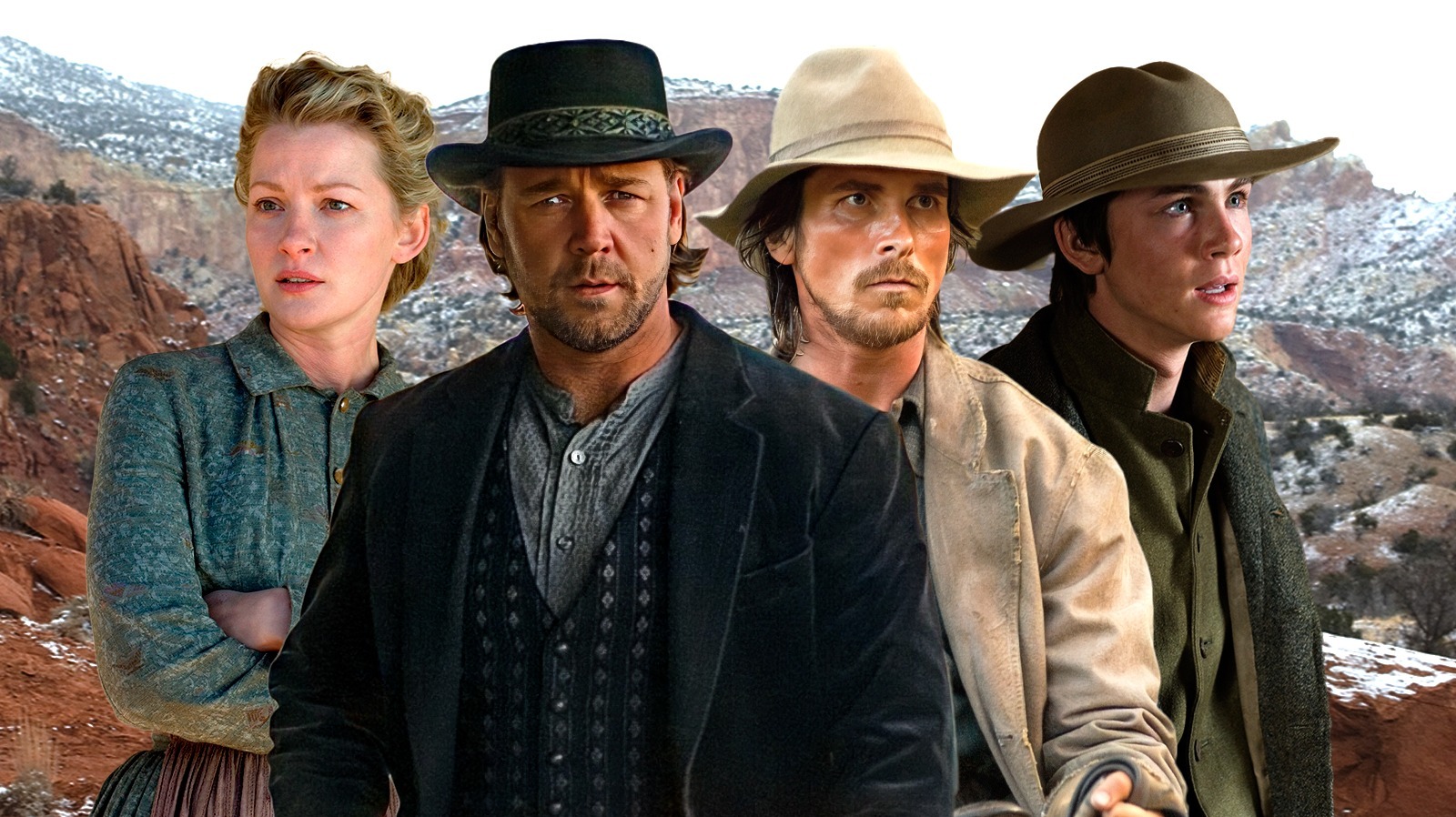
Christian Bale delivers a deeply convincing performance as Dan Evans, portraying a man whose quiet desperation conceals an enduring sense of responsibility. Unlike the traditional Western hero who confidently confronts danger, Dan is physically vulnerable, emotionally exhausted, and painfully aware of his limitations.
Bale communicates these qualities through subtle expressions, restrained dialogue, and the character’s increasingly determined actions. Dan does not suddenly transform into an invincible gunslinger. Instead, his courage develops gradually as he recognizes that doing the right thing may require him to endure fear rather than overcome it completely.
One of the film’s greatest strengths is its treatment of masculinity. Dan’s struggles are not limited to external threats; he is also fighting the belief that he has failed as a husband and father. His relationship with his eldest son, William, becomes particularly important because the boy has begun to admire the confidence and independence associated with Ben Wade.
Dan understands that his son sees him as weak, and this realization intensifies his determination to complete the mission. His journey therefore becomes an attempt to redefine what strength means. Through Bale’s performance, the film suggests that genuine courage is not necessarily demonstrated through physical dominance but through persistence, sacrifice, and the willingness to accept responsibility.
Russell Crowe’s Charismatic and Dangerous Outlaw
Russell Crowe brings extraordinary complexity to Ben Wade, creating a villain who is simultaneously threatening, entertaining, and strangely sympathetic. Wade is a professional criminal who kills without hesitation when circumstances demand it, yet he possesses a sharp intelligence, a dark sense of humor, and an unsettling ability to understand other people.
Crowe avoids turning Wade into a one-dimensional antagonist. His character can be charming in one moment and terrifying in the next, keeping both the other characters and the audience uncertain about his intentions. His calm demeanor often makes him more intimidating than a conventional villain who relies on constant displays of aggression.
The dynamic between Wade and Dan is the film’s emotional and philosophical center. Wade recognizes Dan’s vulnerabilities and repeatedly attempts to exploit them, yet he also develops a degree of respect for the rancher’s determination. Their conversations reveal contrasting attitudes toward freedom, morality, and personal identity.
Wade appears to possess the freedom Dan desperately wants, moving through the world without being constrained by conventional expectations. However, his independence is sustained by violence and selfishness. Dan, meanwhile, is burdened by responsibility but gradually discovers a deeper form of personal freedom through his willingness to stand by his principles.
The tension between these two men gives the film much of its lasting impact.
Direction, Cinematography, and Atmosphere
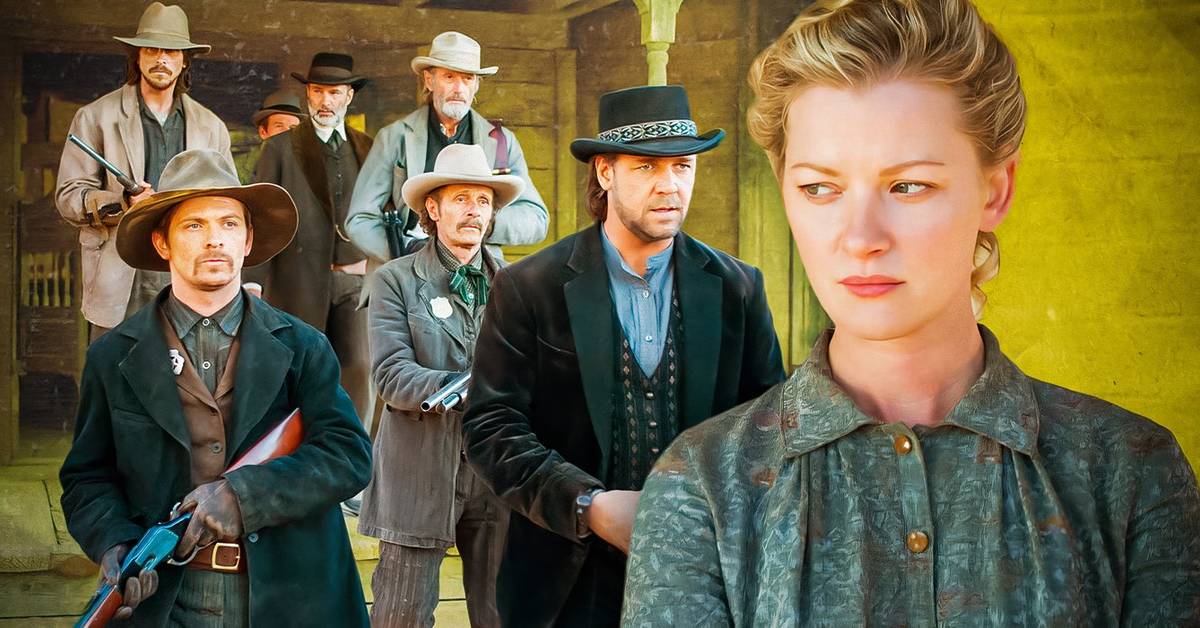
Director James Mangold demonstrates a strong understanding of the Western genre while bringing a contemporary sense of urgency to the material. The film’s pacing allows its characters to develop naturally, but the narrative never loses sight of the danger surrounding the mission.
The cinematography emphasizes the unforgiving beauty of the American frontier. Vast landscapes, isolated settlements, rugged mountains, and dusty streets create a world in which survival often depends on strength, judgment, and luck. These environments are not merely decorative backgrounds; they reinforce the characters’ isolation and the moral uncertainty of their circumstances.
The visual style balances sweeping Western imagery with intimate moments of tension. Close-up shots capture the smallest changes in expression, particularly during conversations between Dan and Wade, while wider compositions highlight the vulnerability of the escort party against the immense landscape.
The action sequences are equally effective. Gunfights are sudden, brutal, and consequential rather than glamorous displays of skill. Violence frequently produces fear and confusion, reminding viewers that the characters inhabit a world where a single mistake can have irreversible consequences.
Marco Beltrami’s musical score further strengthens the atmosphere. Its combination of traditional Western influences and increasingly intense orchestration supports the film’s emotional progression, building suspense without overwhelming the performances.

Themes of Honor, Sacrifice, and Redemption
At its heart, 3:10 to Yuma is a story about the meaning of honor. Dan’s decision to escort Wade challenges the assumption that a person must possess extraordinary strength to perform an extraordinary act. His courage emerges from a deeply personal need to protect his family’s future and recover a sense of self-respect.
The film also explores the relationship between morality and reputation. Wade is widely feared and recognized as a dangerous outlaw, yet his intelligence and charm allow him to manipulate the people around him. Dan, by contrast, has a respectable identity but struggles with feelings of inadequacy. Their contrasting reputations complicate the audience’s understanding of heroism and villainy.
Redemption is another central theme. Dan seeks to prove that his past failures do not define his future, while Wade’s interactions with him introduce moments of unexpected moral ambiguity. The film does not suggest that charm erases criminal responsibility or that one courageous act automatically resolves every personal failure. Instead, it presents redemption as a difficult process shaped by choices and consequences.
Family relationships provide the emotional foundation for these themes. Dan’s commitment to his sons explains why the mission matters so deeply to him. His struggle is not simply about earning money; it is about becoming someone his family can respect and someone he can respect himself.
The film’s ending brings these ideas together through a dramatic confrontation that challenges conventional expectations of justice, loyalty, and sacrifice. Without reducing its characters to simple moral lessons, the conclusion leaves viewers considering whether courage is defined by the outcome of an action or by the principles that motivate it.

Strengths and Weaknesses
One of the film’s greatest strengths is the chemistry between Bale and Crowe. Their contrasting performances create a continuous psychological struggle that remains engaging even when the characters are not exchanging gunfire. The supporting cast, including Ben Foster as Wade’s fiercely loyal associate Charlie Prince, adds further intensity to the story.
The film also benefits from its strong production design, atmospheric cinematography, and carefully constructed suspense. Its action sequences serve the narrative rather than existing solely for spectacle, while its emotional conflicts give the violence meaningful consequences.
However, some viewers may find certain supporting characters less developed than the two central protagonists. The narrative occasionally relies on familiar Western conventions, and its escalating confrontations can feel deliberately heightened. The film’s final act may also divide audiences because of the choices its characters make and the ambiguity surrounding their motivations.
Nevertheless, these limitations do little to diminish the strength of its central performances or the emotional power of its principal conflict.
Conclusion
3:10 to Yuma (2007) is an outstanding modern Western that successfully combines suspenseful action with a thoughtful exploration of courage, honor, and redemption. Through Christian Bale’s vulnerable portrayal of Dan Evans and Russell Crowe’s magnetic performance as Ben Wade, the film creates a compelling confrontation between two men whose lives represent radically different approaches to freedom and responsibility.
James Mangold’s confident direction, the film’s striking visual atmosphere, and its emotionally charged storytelling elevate it beyond a conventional outlaw adventure. Although it draws upon familiar Western traditions, the movie gives those traditions renewed relevance by focusing on personal sacrifice and the difficult choices that define character.
Ultimately, 3:10 to Yuma argues that heroism does not belong exclusively to the fearless or the powerful. Sometimes, it belongs to an ordinary person who continues forward despite knowing exactly how much he stands to lose. For audiences who appreciate intelligent Westerns with memorable performances, moral complexity, and relentless tension, this film remains an essential and rewarding viewing experience.
