GOODFELLAS (1990): HE WAS JUST A KID FROM BROOKLYN — UNTIL THE MAFIA SHOWED HIM A WORLD OF MONEY, POWER, AND DANGER!
In the crowded streets of Brooklyn, a young boy watched a world that most people were taught to fear. While other children dreamed of becoming doctors, lawyers, or baseball stars, Henry Hill wanted something entirely different. He wanted to become a gangster. And in Martin Scorsese’s legendary crime masterpiece Goodfellas (1990), that childhood fascination would lead him into one of the most seductive and dangerous criminal worlds ever portrayed on screen.
From the earliest moments of the film, Henry Hill’s story makes one thing clear: organized crime was not simply a business operating in the shadows. For a young boy growing up in a working-class neighborhood, it appeared to offer everything ordinary life could not provide. There was money, respect, expensive clothing, powerful friendships, and the thrilling possibility of living beyond society’s rules.

Henry, portrayed as a young boy by Christopher Serrone and as an adult by Ray Liotta, grows up fascinated by the mobsters who gather near his neighborhood. Across the street from his family home stands the cabstand associated with local gangster Paulie Cicero. To Henry, the men who spend their days there appear larger than life.
They drive impressive cars, wear tailored suits, carry enormous amounts of cash, and command respect wherever they go. They do not seem burdened by conventional jobs or ordinary responsibilities. Their power is visible in the way people move aside when they enter a room.
For Henry, the attraction is irresistible.
Instead of following the future his parents imagined for him, he begins spending time around the mobsters. He finds small jobs, runs errands, and gradually makes himself useful to the men who control the neighborhood.
What begins as a boy’s fascination slowly develops into a lifelong relationship with organized crime.
Under Paulie’s influence, Henry discovers a world governed by loyalty, secrecy, and an unwritten code of conduct. The people around him operate according to rules that are very different from those taught in school. Respect is earned through usefulness and allegiance, while betrayal can carry consequences far more severe than anything found in ordinary life.
Henry is still young, but he quickly learns how this world functions.
One of the most revealing moments of his early journey occurs when he is arrested for selling stolen cigarettes. Rather than abandoning him, the mobsters celebrate his refusal to reveal information to the authorities.
For Henry, the experience is transformative.
What should have been a frightening encounter with the criminal justice system instead becomes a moment of acceptance. He begins to understand that within this organization, loyalty is rewarded and silence is treated as a mark of honor.
The boy who once stood outside watching the gangsters has now taken his first steps toward becoming one of them.
As the years pass, Henry becomes closely associated with two men who will shape his future: Jimmy Conway, played by Robert De Niro, and Tommy DeVito, portrayed by Joe Pesci.
Jimmy is a charismatic and highly successful criminal whose reputation is built on elaborate robberies and his ability to make money. His generosity toward friends and associates makes him admired, but beneath that charm lies a ruthless willingness to protect himself.
Tommy is an entirely different personality.
Explosive, unpredictable, and dangerously sensitive to disrespect, Tommy represents the terrifying volatility hidden beneath the glamorous image of gangster life. He can transform an ordinary conversation into a deadly confrontation, often before anyone realizes how serious the situation has become.
Together, these men introduce Henry to increasingly serious criminal operations.
The small jobs of his childhood are replaced by robberies, hijackings, illegal schemes, and elaborate plans designed to bring in enormous amounts of money.
Henry’s life changes dramatically.
He enjoys expensive restaurants, exclusive nightclubs, luxurious clothing, and the admiration that comes from being connected to powerful men. Doors open for him. People recognize him. He begins living the kind of life he once imagined while watching the gangsters from across the street.

But Goodfellas never allows the audience to forget the darkness beneath that success.
The same organization that provides protection also demands obedience. Friendship can become suspicion without warning. A harmless misunderstanding can escalate into violence. And the men who appear untouchable are constantly exposed to betrayal, imprisonment, and death.
Henry’s relationship with Karen, played by Lorraine Bracco, offers another perspective on this dangerous lifestyle.
Karen is initially fascinated by Henry’s confidence, connections, and apparent wealth. Their relationship develops into marriage, but she gradually discovers that the glamorous world surrounding her husband has a brutal and unstable foundation.
The expensive gifts and extraordinary privileges come with secrets, infidelity, and fear.
Meanwhile, Tommy’s violent behavior becomes increasingly uncontrollable. His murder of Billy Batts, a made member of the Gambino crime family, places the group in serious danger.
The killing demonstrates a fundamental truth about organized crime: violence does not necessarily solve problems. Sometimes it creates consequences that cannot be escaped.
Henry and Jimmy become involved in concealing the murder, and the secrets binding the men together grow darker.
The story eventually moves toward the infamous Lufthansa heist, a spectacular robbery associated with Jimmy Conway’s criminal network.
The operation produces an enormous fortune, but the aftermath exposes the deadly paranoia of the mob.
As participants begin attracting attention through extravagant spending and careless behavior, Jimmy becomes increasingly concerned about the possibility of betrayal and investigation.
Several people connected to the robbery are subsequently murdered.
The criminal empire that once appeared to offer limitless opportunity begins consuming its own members.
For Henry, the situation becomes even more dangerous as his involvement in drug trafficking deepens.
Despite Paulie’s prohibition against his associates dealing drugs, Henry builds a narcotics operation that brings him money but also exposes him to intense pressure and growing instability.
His drug use, criminal responsibilities, and collapsing personal relationships gradually overwhelm him.
One of the film’s most gripping sequences follows Henry through a frantic day as he attempts to manage multiple obligations while increasingly convinced that authorities are watching him.
His world is falling apart.
Eventually, federal agents arrest him, and the consequences become impossible to avoid. Paulie turns away from him, and Henry begins to fear that Jimmy may see him as a liability.
The people who once represented protection, loyalty, and brotherhood now appear capable of destroying him.
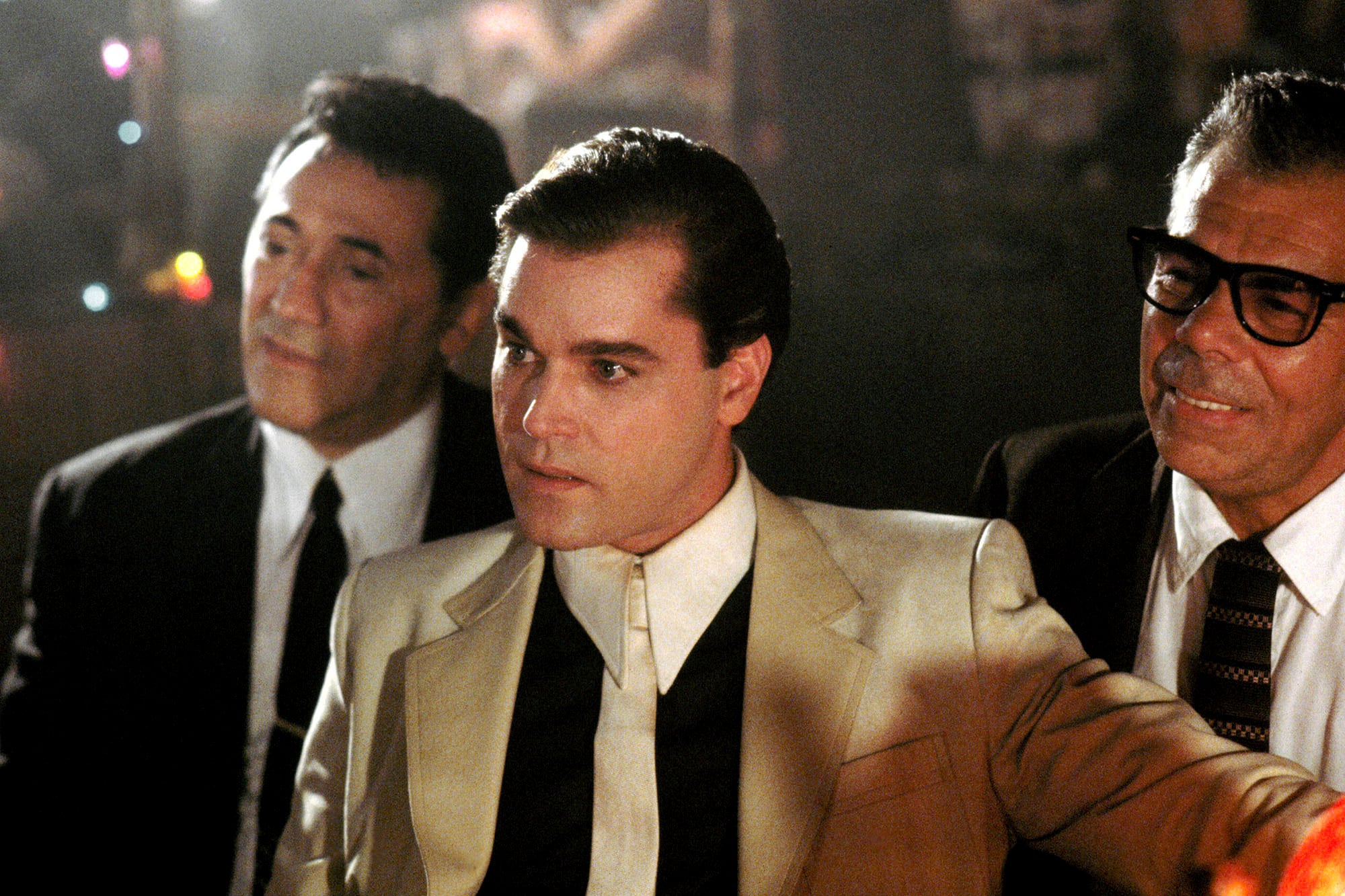
Faced with the possibility of imprisonment or murder, Henry makes the decision that would have seemed unthinkable to his younger self.
He cooperates with federal authorities.
By entering witness protection and testifying against former associates, Henry abandons the criminal world he spent his entire life trying to enter.
The transformation is devastating in its irony.
The boy who once dreamed of being recognized as a powerful gangster ultimately survives by surrendering the very identity he fought to achieve.
In the film’s closing moments, Henry reflects on the ordinary existence that now awaits him. The privileges, excitement, and social power of his former life have disappeared.
He must live as an average person.
And for someone who once believed that being a gangster meant possessing everything, that ordinary existence feels like the final punishment.
Directed by Martin Scorsese, Goodfellas remains one of cinema’s most influential examinations of organized crime because it reveals both the attraction and destruction of criminal power.
Ray Liotta’s portrayal of Henry captures a man simultaneously seduced and trapped by his ambitions. Robert De Niro brings calculated menace to Jimmy Conway, while Joe Pesci’s explosive performance as Tommy DeVito remains one of the most memorable portrayals of violent unpredictability in modern film.
Yet the heart of the story belongs to the young boy who first looked across a Brooklyn street and imagined a better life.
He saw men who seemed to possess everything he wanted.
He followed them.
He became one of them.
And eventually, he discovered that the world he admired could take away everything he had.
Goodfellas (1990) is more than a gangster movie. It is a story about ambition, loyalty, temptation, betrayal, and the terrible price of confusing power with freedom.
Because sometimes the most dangerous decision a person makes begins with a childhood dream.
#goodfellas #goodfellas1990 #rayliotta #robertdeniro #joepesci #martinscorsese #mafia #gangstermovies #crimemovies #mobmovies #classicmovies
