Now You See Me (2013): They Made Millions Disappear, and the FBI Couldn’t Explain a Thing
Now You See Me (2013): Four Master Illusionists, Impossible Bank Heists, and the Secret Genius Behind It All
What if a group of magicians could rob a bank thousands of miles away while standing on a stage in front of a live audience? What if they could steal millions, distribute the money to ordinary people, and disappear before the police even understood what had happened? In a world where every clue could be a trap and every witness could be deceived, four extraordinary illusionists become the center of an investigation that grows more mysterious with every performance. The FBI believes it is hunting a team of criminals, but the closer investigators get to the truth, the more they discover that someone else may be controlling the entire game from the shadows.
Now You See Me (2013), directed by Louis Leterrier and starring Jesse Eisenberg, Mark Ruffalo, Woody Harrelson, Isla Fisher, Dave Franco, Mélanie Laurent, Morgan Freeman, and Michael Caine, is a crime thriller built around elaborate illusions, spectacular heists, and a final revelation that changes the meaning of everything that came before.
The story begins when four talented magicians receive mysterious invitations that lead them to an apartment in New York City. Each possesses a different skill, and each has spent years trying to turn that talent into success.
J. Daniel Atlas is a confident stage illusionist who specializes in card tricks and sophisticated sleight of hand. Merritt McKinney is a mentalist capable of reading people and manipulating their behavior through psychological techniques. Henley Reeves is an accomplished escape artist who can free herself from dangerous restraints, while Jack Wilder is a street magician and skilled pickpocket whose quick hands make him an exceptional performer.
Inside the apartment, the four discover an elaborate set of instructions and evidence of a mysterious benefactor. They do not know who has brought them together or what the ultimate objective might be, but the materials suggest that they have been selected for something far bigger than an ordinary magic show.
A year later, the four performers reappear as a sensational act known as the Four Horsemen. Sponsored by wealthy insurance businessman Arthur Tressler, they begin performing spectacular shows that attract enormous audiences.
Their first major performance takes place in Las Vegas. During the show, they invite an audience member onto the stage and announce that they will transport him into a bank vault in Paris.
What follows appears impossible.
The audience member seems to disappear from the theater and materialize inside a vault belonging to Crédit Républicain. Moments later, enormous quantities of money are drawn through the vault’s ventilation system and showered over the Las Vegas audience.
At first, the spectators assume the entire event is a spectacular illusion. But investigators in Paris discover that the vault has actually been emptied of its recent cash shipment.
The Four Horsemen have apparently robbed a bank thousands of miles away without leaving the theater.
The FBI assigns Agent Dylan Rhodes to investigate, and he joins forces with French Interpol detective Alma Dray. Their task is to determine how the robbery occurred and whether the magicians can be held responsible.
The investigators question the Four Horsemen, but the performers offer little useful information. Their explanations are confusing, their tricks are carefully concealed, and the authorities cannot find sufficient evidence to prove that the theft was carried out by the people onstage.
Frustrated, Rhodes turns to Thaddeus Bradley, a former magician who has made a career out of exposing the secrets behind famous illusions. Bradley studies the Horsemen’s performance and concludes that the apparent magic must have involved elaborate preparation, deception, and misdirection.

He explains how the group could have manipulated the audience member, used a specially prepared vault, and arranged the money transfer long before the audience ever arrived. His analysis provides the investigators with possible explanations, but it does not reveal who organized the operation or why.
As the investigation continues, the Horsemen announce their next major performance in New Orleans.
This time, their target is Arthur Tressler himself.
During the show, the magicians reveal that Tressler’s insurance company denied numerous claims from people affected by Hurricane Katrina. The Horsemen then appear to transfer millions of dollars from Tressler’s accounts directly into the bank accounts of audience members whose insurance claims were rejected.
The audience erupts in excitement. To many of the spectators, the Horsemen look less like criminals and more like modern-day Robin Hoods, using extraordinary abilities to punish the wealthy and help people who have been treated unfairly.
Tressler, however, is furious. He has lost a vast amount of money and hires Bradley to expose the magicians and destroy their reputation.
Rhodes becomes increasingly frustrated as the Horsemen continue staying one step ahead. Every time the FBI appears close to catching them, a new illusion sends the investigation in the wrong direction.
Alma begins to suspect that their performances may be connected to a secret organization of magicians known as the Eye. According to the legend, the Eye is an ancient society that rewards exceptional illusionists and uses their abilities to expose corruption and redistribute wealth.
The possibility changes the way she views the investigation. The Horsemen may not simply be committing crimes for personal profit. Their performances appear designed to punish specific people, and the mysterious benefactor behind them may have a much larger purpose.
Meanwhile, the FBI discovers that its surveillance has been compromised. The Horsemen have used deception to monitor the investigators and anticipate their movements, making it nearly impossible for Rhodes to know which leads are genuine.
The investigation eventually takes the team to an apartment connected to the magicians. When police arrive, three of the Horsemen escape, while Jack stays behind to destroy evidence.
A high-speed pursuit follows, ending when Jack’s car crashes and bursts into flames. He is presumed dead, leaving the investigation with another apparent mystery.
Rhodes continues pursuing the remaining magicians, convinced that their elaborate schemes cannot continue forever. He uncovers information about their next target: a secure safe belonging to Elkhorn, a company connected to an earlier disaster involving a magician named Lionel Shrike.
The FBI races to intercept the safe before the Horsemen can steal it. But when authorities finally gain access to the supposed target, they discover that the safe is only a decoy filled with balloon animals.

The real operation has already succeeded.
At the Horsemen’s final performance in New York, the magicians deliver a farewell message and leap from a rooftop, apparently falling to their deaths in the river below. An enormous shower of counterfeit money accompanies their disappearance, leaving the audience stunned.
Rhodes watches helplessly as the team vanishes once again. Yet the investigation is not quite over.
The real Elkhorn safe is discovered inside Bradley’s car, and the former magician is arrested for his apparent involvement in the theft. The evidence seems conclusive, and Bradley is placed behind bars.
But when Rhodes visits him in prison, the truth finally emerges.
Bradley realizes that he has been manipulated from the beginning. Rhodes has not simply been investigating the Four Horsemen—he has secretly orchestrated their operations, guiding the FBI toward carefully constructed false leads and arranging for Bradley to take the blame.
The revelation explains the strange inconsistencies that have plagued the case. Jack Wilder never actually died; he faked his death and worked behind the scenes to execute the real safe robbery. The Horsemen used the decoy, the FBI’s assumptions, and Bradley’s reputation as a debunker to ensure that the authorities would misunderstand the final operation.
The apparent disappearance of the magicians was another illusion, and the stolen money was deliberately planted to frame Bradley.
Rhodes then meets the Horsemen at a carousel in Central Park and reveals his true role. He is not merely the FBI agent who failed to capture them. He is the mastermind who designed the entire sequence of heists and manipulated the investigation from the inside.
He also reveals the personal motive behind the operation.
Rhodes is the son of Lionel Shrike, a magician whose career was damaged when Bradley exposed one of his tricks. Years later, Shrike attempted a dangerous escape using a faulty Elkhorn safe and died during the performance. The disaster destroyed Rhodes’s family and left him consumed by the need to avenge his father’s death.
Each target in the Horsemen’s operation was connected to that tragedy. The bank’s insurance company and Tressler’s business represented institutions that had denied his family the financial support he believed they deserved, while Bradley had publicly undermined his father and profited from exposing his secrets.
By organizing the heists, Rhodes punished those he held responsible while proving that an illusion could defeat even the most sophisticated investigation.
The Horsemen’s apparent crimes were therefore part of a carefully designed plan of revenge, and their final disappearance marked the completion of their initiation into the Eye.
In the closing scenes, Alma meets Rhodes in Paris. She has pieced together his involvement and understands that he has deceived his own colleagues for the sake of a personal mission. Rhodes admits the truth, and Alma chooses to protect his secret.
The story ends with Rhodes having achieved his objective, Bradley imprisoned, and the Four Horsemen officially welcomed into the mysterious world of the Eye.
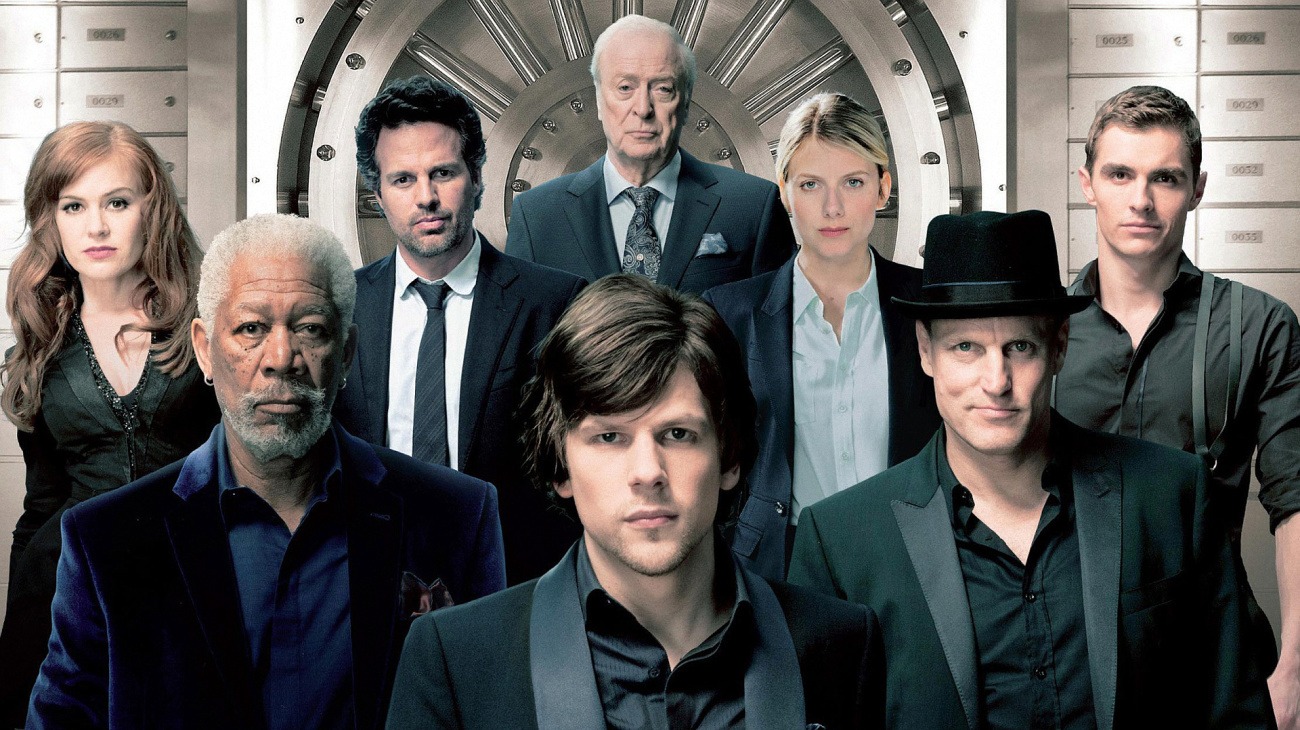
Jesse Eisenberg brings sharp confidence to Daniel Atlas, while Woody Harrelson gives Merritt a playful intelligence that makes psychological manipulation part of the group’s appeal. Isla Fisher and Dave Franco contribute the escape artistry and sleight of hand that make the performances convincing, while Mark Ruffalo portrays Rhodes as an investigator whose frustration hides a much more complicated purpose. Morgan Freeman’s Bradley represents the temptation to believe that understanding a trick means understanding the person performing it.
Now You See Me is more than a story about spectacular magic tricks and impossible bank robberies. It is a thriller about perception, deception, and the danger of assuming that the person asking the questions cannot also be controlling the answers.
The Four Horsemen exploit the audience’s expectations, while Rhodes uses the FBI’s confidence in its own procedures to conceal the truth. Every clue seems to point in one direction until a new revelation changes its meaning.
By the end, the central mystery is no longer how the magicians carried out their heists. It is how an entire investigation was transformed into one enormous performance—and how the man responsible managed to stand in plain sight without anyone recognizing him.
Because in a world built on illusion, the greatest trick is not making something disappear.
It is convincing everyone that they know exactly who they are looking for, while the real mastermind is standing right beside them.
