In a place where hope goes to die, one extraordinary man brings something no one can explain.
The Green Mile: A Powerful Story of Humanity, Miracles, and the True Meaning of Justice
A timeless prison drama that explores the darkest corners of human nature while revealing the extraordinary power of compassion, innocence, and faith.
Introduction
Released in 1999, The Green Mile is one of the most emotionally powerful films in modern cinema. Directed by Frank Darabont and based on the novel of the same name by Stephen King, the film combines elements of drama, fantasy, and supernatural storytelling to create an unforgettable cinematic experience. Starring Tom Hanks, Michael Clarke Duncan, David Morse, and Sam Rockwell, the movie takes audiences into the world of death row, where prisoners await their final moments and the men responsible for carrying out their sentences struggle with the moral weight of their duties.
Unlike conventional prison films that focus primarily on violence, escape, or crime, The Green Mile examines deeper questions about life, death, justice, and the nature of good and evil. Through its carefully developed characters and emotionally devastating narrative, the film challenges viewers to reconsider their assumptions about guilt, innocence, and the value of human life.
More than two decades after its release, The Green Mile remains a remarkable achievement in filmmaking, demonstrating how a deeply personal story can explore universal questions about humanity.
A Story Set on Death Row
The film takes place in 1935 at Cold Mountain Penitentiary in Louisiana, where Paul Edgecomb, played by Tom Hanks, works as the chief guard on death row. The prisoners walk along a green linoleum corridor known as the Green Mile on their way to the execution chamber. For those condemned to death, this hallway represents the final journey of their lives.
Paul and his fellow guards are accustomed to witnessing suffering, fear, and death. However, their daily routine changes dramatically when John Coffey, a physically imposing Black man played by Michael Clarke Duncan, arrives at the prison. Coffey has been sentenced to death for the alleged murder of two young girls. Despite his frightening appearance and the seriousness of the accusation, he behaves with remarkable gentleness and possesses a childlike innocence that immediately distinguishes him from the other inmates.
As Paul gets to know Coffey, he discovers that the prisoner possesses extraordinary healing abilities. Coffey can seemingly absorb the suffering and illnesses of others, revealing a supernatural gift that raises profound questions about the relationship between appearance and reality.
Meanwhile, the prison is also home to Percy Wetmore, a cruel and arrogant guard whose behavior repeatedly threatens the safety and dignity of the prisoners. His presence introduces another dimension to the story, demonstrating how people entrusted with authority can misuse their power when compassion and accountability are absent.
As the narrative unfolds, Paul becomes increasingly convinced that the justice system may have condemned an innocent man. Yet, despite the extraordinary evidence of Coffey’s goodness, the truth comes with consequences that challenge Paul’s understanding of justice, morality, and his own responsibilities.

Outstanding Performances and Memorable Characters
One of the greatest strengths of The Green Mile is its exceptional cast. Tom Hanks delivers a restrained and deeply sympathetic performance as Paul Edgecomb. Rather than portraying Paul as a flawless hero, Hanks presents him as an ordinary man struggling to reconcile his professional responsibilities with his personal conscience. His growing relationship with Coffey becomes the emotional foundation of the film.
Michael Clarke Duncan gives a particularly unforgettable performance as John Coffey. His physical presence initially suggests intimidation, but his gentle voice, vulnerable expressions, and sincere kindness reveal a completely different character. Duncan successfully communicates the contradiction at the heart of Coffey: a man who appears dangerous to the outside world but possesses extraordinary empathy and innocence.
David Morse also deserves recognition for his portrayal of Brutus Howell, a guard whose loyalty and moral integrity provide a counterbalance to Percy’s cruelty. Sam Rockwell, meanwhile, creates a disturbing and volatile character in William Wharton, adding tension and unpredictability to the prison environment.
Percy Wetmore, portrayed by Doug Hutchison, is especially important to the film’s moral framework. His cruelty is not simply a matter of personal unpleasantness; it demonstrates how unchecked authority can turn an already difficult environment into a place of unnecessary suffering. Through these contrasting characters, the film suggests that a person’s true nature is revealed not by their position or appearance, but by how they treat others.

Themes of Justice, Innocence, and Humanity
At its heart, The Green Mile is a film about the difference between legal judgment and moral truth. John Coffey’s conviction exposes the possibility that a justice system can make irreversible mistakes, particularly when prejudice influences how people are perceived. His race, physical appearance, and limited ability to defend himself contribute to the tragedy of his situation.
The film does not present justice as a simple matter of determining guilt or innocence. Instead, it asks whether a system can truly be considered just when it fails to recognize the humanity of the person standing before it. Coffey’s story becomes especially tragic because the audience understands his innocence while watching the institutions around him remain incapable of correcting their mistake.
Compassion is another central theme. Although Paul and his colleagues work within a system designed to carry out executions, they are not entirely defined by their uniforms or duties. Their moments of kindness reveal the possibility of maintaining humanity even in an environment associated with suffering and death.
The supernatural elements deepen these ideas. Coffey’s healing abilities symbolize the possibility of goodness in a world filled with cruelty. His gift is extraordinary, yet the people around him often fail to understand or protect him. The film therefore presents a painful contradiction: someone capable of relieving the suffering of others cannot escape the suffering imposed upon himself.
Ultimately, The Green Mile encourages viewers to look beyond appearances, question their assumptions, and recognize the moral responsibility that comes with judging another human being.
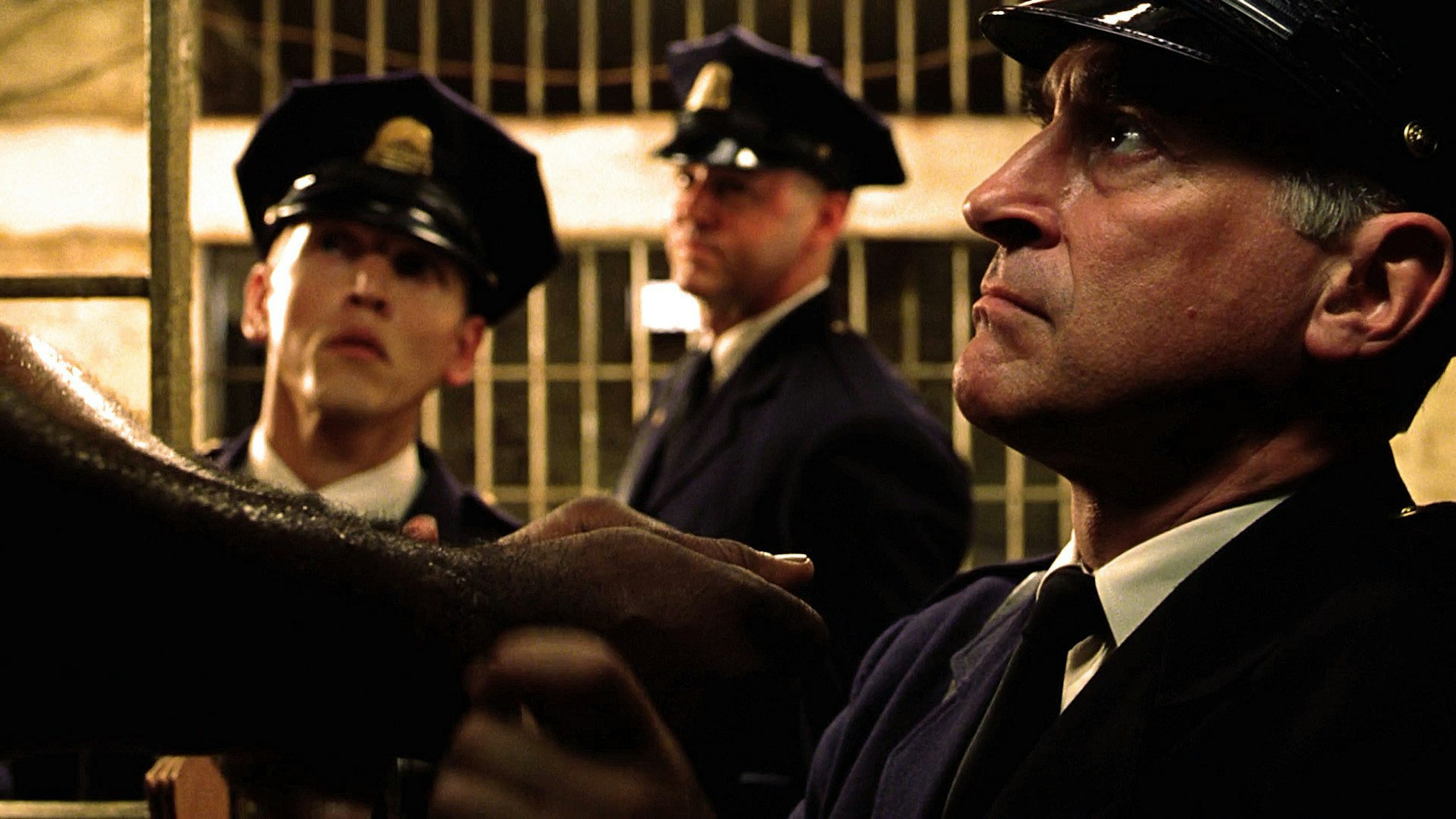
Cinematography, Atmosphere, and Emotional Impact
Frank Darabont directs the film with patience and sensitivity, allowing its characters and themes to develop naturally. Rather than rushing from one dramatic event to another, the story takes time to establish the daily rhythms of prison life. This deliberate pacing makes the characters’ relationships feel authentic and gives the most emotional moments their full impact.
The cinematography emphasizes the contrast between the prison’s confined spaces and the extraordinary experiences that occur within them. The green corridor becomes a powerful visual symbol of the journey toward death, while the muted colors and controlled lighting reinforce the atmosphere of sadness, tension, and inevitability.
Thomas Newman’s musical score also plays an essential role in shaping the film’s emotional landscape. Its gentle melodies heighten the tenderness of certain scenes without overwhelming the performances. The combination of music, imagery, and silence creates a reflective atmosphere that stays with viewers long after the film ends.
Although the movie contains supernatural events, its emotional power comes primarily from the human relationships at its center. The fantasy elements do not distract from the story; instead, they make its moral questions more immediate and memorable.
A Tragic Ending That Leaves a Lasting Impression
The final act of The Green Mile is devastating because it brings the film’s central contradictions to their unavoidable conclusion. Paul discovers evidence that John Coffey is innocent, yet he cannot prevent the execution from taking place. Coffey’s fate becomes a painful reminder that truth does not always prevail and that good intentions cannot always overcome institutional injustice.
The tragedy extends beyond Coffey’s death. Paul is left to live with the knowledge that he participated in an act he believes was profoundly wrong. His extraordinary longevity, revealed through the film’s framing narrative, becomes both a blessing and a burden. He must continue living while carrying memories of the people he has lost and the suffering he has witnessed.
This ending refuses to offer easy comfort. Instead, it asks audiences to consider the consequences of cruelty, the limits of human power, and the responsibilities people carry when they participate in decisions that affect others’ lives.

Final Verdict
The Green Mile is far more than a prison drama or a supernatural fantasy. It is a thoughtful exploration of compassion, prejudice, morality, and the devastating consequences of injustice. Through outstanding performances, careful direction, memorable music, and a deeply affecting story, the film transforms a confined prison setting into a powerful examination of the human condition.
Its greatest achievement lies in its ability to make viewers feel compassion for people whose lives might otherwise be reduced to labels such as prisoner, criminal, or guard. It reminds us that outward appearances can be misleading, that authority does not guarantee righteousness, and that innocence can be destroyed when society refuses to look beyond its own assumptions.
For viewers who appreciate emotionally rich storytelling and films that provoke reflection long after the credits roll, The Green Mile is essential viewing. Its sadness is undeniable, but so is its beauty. Ultimately, the film leaves audiences with a profound message: even in places defined by suffering and death, humanity can shine through—and sometimes, the greatest tragedy is not the loss of a life, but the world’s failure to recognize its worth.
