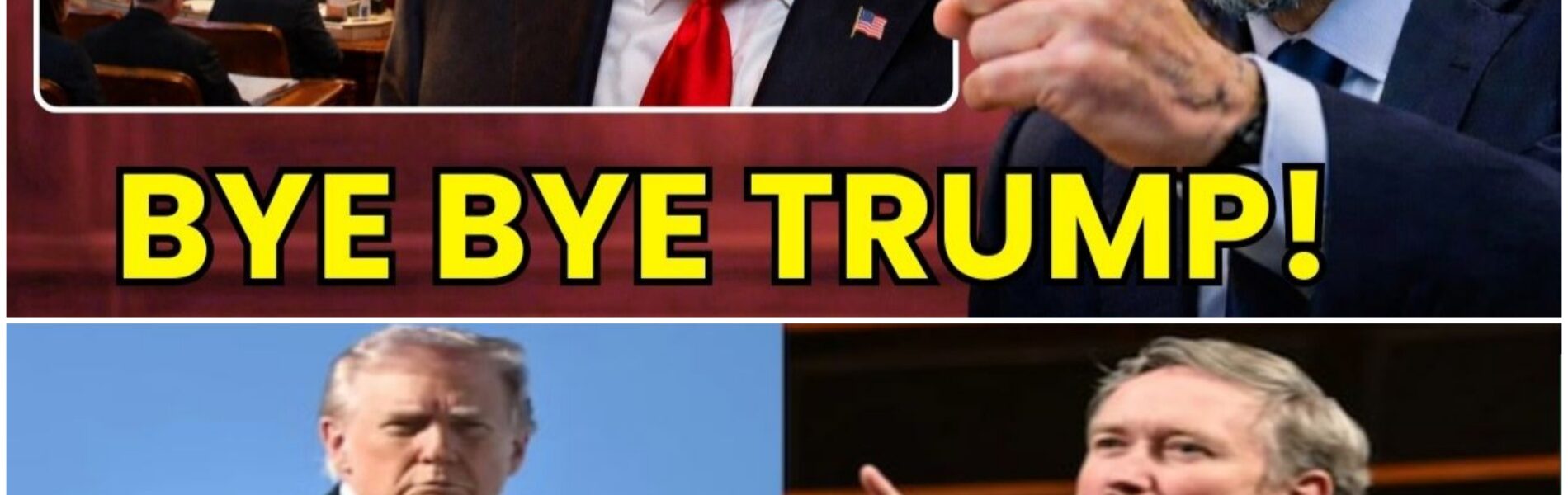
Senators move to block unilateral Iran strikes, igniting constitutional war powers showdown.

🚨 BREAKING: In a dramatic assertion of congressional authority, seventy United States senators have reportedly advanced legislation aimed at preventing unilateral military strikes against Iran — setting the stage for a constitutional confrontation over war powers and executive authority.
At the heart of the controversy is a fundamental question: who decides when America goes to war?
Critics argue that recent military actions against Iranian targets reflect what an unauthorized war looks like. There has been no formal declaration of war by Congress. There has been no new Authorization for Use of Military Force (AUMF) specifically directed at Iran. And there has been no comprehensive public strategy outlining objectives, end goals, or the path to de-escalation. Instead, opponents describe a pattern in which military strikes are ordered first, while legal justification and long-term planning remain unclear.
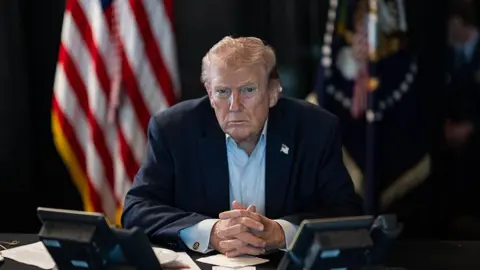
Under Article I of the U.S. Constitution, the power to declare war rests with Congress. The president, as commander in chief under Article II, directs the armed forces — but that authority exists within a constitutional framework of checks and balances. The 2001 Authorization for Use of Military Force, passed in the aftermath of the September 11 attacks, empowered the president to target al-Qaeda and the Taliban. It did not authorize open-ended military action against Iran. No new vote has expanded that mandate to include Tehran.
Supporters of the Senate effort argue that bypassing Congress undermines democratic accountability. War carries immense consequences: American lives at risk, regional instability, and economic repercussions that can ripple across global markets. Decisions of such magnitude, they contend, must involve elected representatives debating openly and voting on the record.
Adding to the tension is the rhetoric surrounding the strikes. Declarations of “total victory” over Iranian nuclear facilities have been made — even as further military action is reportedly contemplated or executed against similar targets. That contradiction, critics say, raises serious strategic questions. If the objective has already been achieved, why continue strikes? And if the objective has not been achieved, what is the clearly defined end state?
The debate also revives memories of the 2003 Iraq War. At that time, intelligence assessments regarding weapons of mass destruction played a central role in the justification for military intervention. Critics now warn against repeating a cycle of threat inflation, rapid escalation, and insufficient planning for long-term consequences. They argue that history demonstrates how quickly limited military action can expand into prolonged conflict.
Complicating matters further is the legacy of the 2015 Iran nuclear agreement, formally known as the Joint Comprehensive Plan of Action (JCPOA). That agreement, negotiated between Iran and several world powers, imposed strict limits and inspection requirements on Iran’s nuclear program. However, after the United States withdrew from the deal in 2018, many of those constraints gradually unraveled. Critics of renewed military action argue that diplomatic mechanisms once existed to manage nuclear concerns — mechanisms that deteriorated following withdrawal.

Iran today is not Iraq in 2003. It is geographically larger, militarily more sophisticated, and deeply embedded within a network of regional alliances and proxy forces. Its influence extends across multiple Middle Eastern theaters, including Lebanon, Syria, Iraq, and Yemen. Any direct confrontation risks triggering retaliatory measures not only from Iran itself but from affiliated groups throughout the region.
The potential consequences are significant. A broader Middle East conflict could endanger American troops stationed abroad, disrupt global energy supplies, and destabilize already fragile political environments. Oil markets are particularly sensitive to tensions involving Iran, given its strategic location near critical shipping lanes such as the Strait of Hormuz. Even limited strikes can produce cascading economic effects, from rising fuel prices to volatility in international financial markets.
Supporters of executive authority argue that presidents must retain the flexibility to respond swiftly to emerging threats. They contend that modern security challenges do not always allow time for extended congressional debate. However, opponents counter that flexibility does not negate constitutional boundaries. Emergency defensive actions, they say, differ fundamentally from sustained or repeated military campaigns.
The Senate legislation seeks to clarify that distinction. By requiring explicit congressional authorization before further offensive military operations against Iran, lawmakers aim to reassert legislative oversight. Whether the measure can overcome political divisions and potential executive resistance remains uncertain. But symbolically, the vote signals growing bipartisan unease about the expansion of presidential war-making authority.
Ultimately, this debate transcends foreign policy. It centers on constitutional governance itself. The framers of the Constitution intentionally divided war powers to prevent unilateral decisions that could entangle the nation in prolonged conflict. They believed that requiring collective deliberation would slow the rush to war and ensure broader accountability.
As tensions rise, the world watches not only the unfolding situation in the Middle East but also the resilience of American democratic institutions. Will constitutional checks and balances function as designed? Will Congress reclaim a more assertive role in decisions of war and peace? Or will executive authority continue to expand in moments of crisis?
The stakes are profound. Military escalation could reshape regional geopolitics for years. At the same time, the domestic constitutional implications may prove equally significant. In this moment, the question is not solely about Iran — it is about whether the constitutional framework governing the use of force remains intact.
In the end, the confrontation between the Senate and the executive branch represents more than a policy disagreement. It is a test of democratic accountability, separation of powers, and the enduring principle that decisions of war must reflect the will of the people through their elected representatives.