💀🔥 THE BORDER WAS ONLY THE BEGINNING — THE REAL DANGER WAS WAITING IN THE SHADOWS.
INTO THE MORAL ABYSS: Why Denis Villeneuve’s Sicario Remains a Modern Masterpiece of Tension and Corruption
By Staff Writers
Published: October 21, 2026
LOS ANGELES — When director Denis Villeneuve and screenwriter Taylor Sheridan released Sicario in 2015, they did not merely make another crime thriller about the drug war. They crafted a haunting, heart-pounding journey into a lawless borderland where the line between good and evil is blurred beyond recognition.
Framed by Jóhann Jóhannsson’s terrifying, thunderous score and Roger Deakins’ breathtaking cinematography, Sicario stands as a masterclass in cinematic suspense—a bleak, uncompromising examination of power, morality, and the dark reality of state-sanctioned violence.

The Premise: Welcome to Juárez
The story follows Kate Macer (Emily Blunt), an idealistic FBI agent specializing in kidnapping response. After discovering a gruesome house of horrors filled with rotting corpses behind the drywall of a Sonora Cartel safe house in Arizona—a trap that subsequently kills two of her team members—Kate volunteers for a elite, joint task force led by the CIA.
Told that the operation aims to dismantle the cartel network responsible for the massacre, Kate joins Matt Graver (Josh Brolin), a breezy, flip-flop-wearing government operative, and Alejandro Gillick (Benicio del Toro), a quiet, brooding Mexican former prosecutor with a mysterious past.
Kate quickly realizes that she is not part of a standard law enforcement operation. Instead, she is thrust into a shadow war where rules of engagement, constitutional rights, and national sovereignty are treated as mere obstacles. Her descent into hell begins with a harrowing convoy mission across the US-Mexico border into the violent heart of Juárez—a sequence that remains one of the most tense, expertly crafted action pieces in modern cinema history.
Three Pillars of Morality: Kate, Matt, and Alejandro
At the core of Sicario is a brilliant tripartite character study representing different philosophical responses to systemic evil.

-
Kate Macer (Emily Blunt): Kate is the audience’s surrogate—an ethical officer who believes in the rule of law, procedure, and accountability. Blunt plays her with a remarkable blend of physical toughness and emotional vulnerability. As the film progresses, Kate is steadily stripped of her agency, realizing she was not brought along for her tactical expertise, but merely to satisfy legal technicalities allowing the CIA to operate domestically.
-
Matt Graver (Josh Brolin): Matt represents cold, pragmatic realpolitik. He does not care about justice in the traditional sense; he cares about control. Brolin plays him with an unsettling, charismatic ease, treating the horrific realities of drug cartels as a manageable ecosystem that can only be governed through equal, unyielding brutality.
-
Alejandro Gillick (Benicio del Toro): Alejandro is the ghost in the machine—a man consumed by personal tragedy after his wife and daughter were brutally murdered by the cartel boss Fausto Alarcon. Del Toro delivers a career-defining, specter-like performance. He speaks softly and moves with lethal purpose, acting as an angel of death whose thirst for vengeance aligns perfectly with the CIA’s covert objectives.
The Art of Escalating Tension
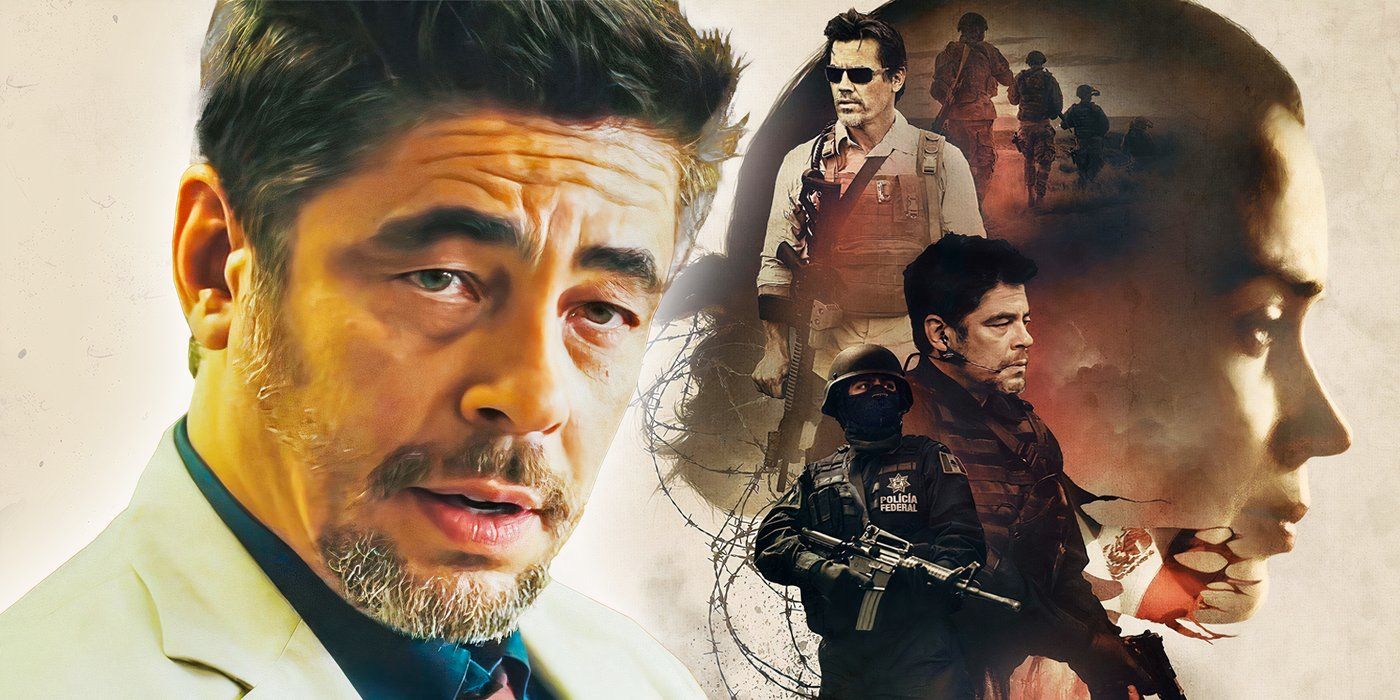
Denis Villeneuve’s direction in Sicario is a clinic in atmospheric dread. The film rarely relies on cheap jump scares or constant gunplay; instead, it builds pressure slowly until the atmosphere becomes unbearable.
The Border Crossing Sequence
The famous Juárez sequence is a masterwork of pacing. As the black SUV convoy maneuvers through the congested, sun-baked streets of Juárez—passing mutilated bodies hanging from overpasses—the camera lingers on the nervous glances of the agents and the hostile stares of the locals. When a traffic jam halts the convoy near the border line and armed cartel hitmen attempt to ambush them, the swift, mechanical execution by the American task force leaves both Kate and the audience gasping for air.
The Thermal Night-Vision Raid

In the film’s climax, the team descends into a clandestine drug tunnel along the border. Shot through night-vision and thermal imaging by Roger Deakins, the sequence transforms the soldiers into alien figures gliding through the dark, creating a surreal, nightmare-like aesthetic that underscores the surreal nature of the border war.
Jóhannsson and Deakins: A Masterful Audio-Visual Canvas
It is impossible to separate the impact of Sicario from its technical craft.
The late Jóhann Jóhannsson’s musical score—specifically the recurring track “The Beast”—uses heavy, pulsing bass and metallic percussion that sounds like a mechanical predator roaring from the depths of the earth. It creates a constant state of anxiety, signaling that danger is omnipresent.
Complementing the soundscape is Roger Deakins’ iconic camera work. Deakins captures the vast, indifferent beauty of the Chihuahuan Desert from high above, framing the vehicles below as tiny ants crawling across an endless, harsh landscape. The contrast between the stark natural beauty and human depravity is visually stunning.
A Devastating Moral Conclusion
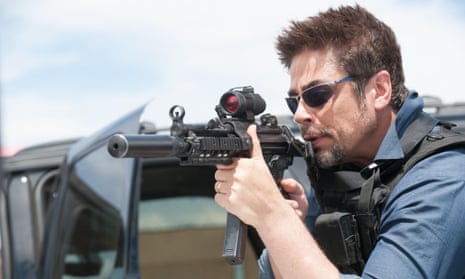
Sicario offers no easy solutions, no triumphant victories, and no moral redemption. In the film’s final act, Alejandro corners the cartel kingpin at his dinner table, executing him alongside his family in an act of ruthless, personal retribution.
When Alejandro later confronts Kate in her apartment, forcing her at gunpoint to sign a document certifying that the operation was conducted legally, he leaves her with a chilling warning that defines the film’s worldview:
“You should move to a small town, somewhere the rule of law still exists. You’re not a wolf, and this is a land of wolves now.”

The Legacy of a Neo-Noir Classic
A decade after its initial release, Sicario remains a towering achievement in modern cinema. It managed to critique foreign policy, police overreach, and the tragic futility of the Drug War without ever devolving into preachy melodrama.
By prioritizing character integrity, atmosphere, and uncompromising realism, Villeneuve and Sheridan delivered a timeless masterpiece—a stark reminder of what happens when society sacrifices its morality in the pursuit of absolute control.
