“THE STREETS OF MINNEAPOLIS WILL REMEMBER THEIR NAMES” – BRUCE SPRINGSTEEN TURNS GRIEF INTO MUSIC WITH A POWERFUL TRIBUTE SONG HONORING ALEX PRETTI AND RENEE GOOD AFTER THEIR DEATHS SPARKED NATIONAL OUTRAGE

Many celebrities don’t speak directly about Alex or Renee, but Bruce Springsteen chose another way. Earlier this year, he turned his grief and anger into a song for Minneapolis. After Alex Pretti and Renee Good passed away in incidents involving immigration officers, he wrote Streets of Minneapolis as a tribute to their courage. One had been on a call.
Bruce Springsteen’s Tribute to Minneapolis: Music Born from Grief and Protest
When tragedy struck the city of Minneapolis earlier this year, many public figures remained cautious in their words. But Bruce Springsteen chose a different path — he turned his emotions into music. In the days following the deaths of two Minneapolis residents, Alex Pretti and Renée Good, the legendary musician wrote and released a protest song titled Streets of Minneapolis, dedicating it to the victims and to the broader community affected by the incident. The song quickly became one of the most talked-about musical responses to the events surrounding the controversial immigration enforcement operation that had shaken the city.
The deaths of Alex Pretti and Renée Good occurred during an aggressive federal immigration crackdown in Minnesota known as Operation Metro Surge, which involved thousands of federal agents deployed in the region. The two civilians were killed in separate confrontations with immigration officers, sparking national outrage, protests, and calls for investigations into the conduct of federal authorities.
Pretti, an ICU nurse, and Good, a mother of three, were remembered by friends and family as ordinary people caught in extraordinary circumstances. Their deaths ignited protests across Minneapolis and fueled an intense national debate over immigration enforcement tactics and the presence of federal agents in local communities.
For Springsteen, whose career has long intertwined music with social commentary, the tragedy struck a deeply emotional chord. According to reports, he wrote “Streets of Minneapolis” almost immediately after news of the second death broke. Within days he had recorded and released the song online, explaining that it was meant as a tribute to the victims and a message of solidarity to the people of Minneapolis and immigrant communities living in fear.
The speed of the song’s release surprised even longtime fans. Unlike traditional album production cycles that can take months or years, this was a “rapid-response protest song,” written and recorded in direct reaction to unfolding events.
In the lyrics, Springsteen paints a haunting portrait of a city shaken by violence and fear. He describes Minneapolis as a place where ordinary people are suddenly forced into moments of courage, where neighbors watch out for one another and communities try to hold together amid uncertainty. The song also includes sharp criticism of federal immigration policies and the officials responsible for the crackdown, reflecting Springsteen’s long-standing tradition of using music to challenge political power.
Throughout his career, Springsteen has often written songs that confront injustice or social tension. Tracks like “American Skin (41 Shots)” and “The Ghost of Tom Joad” explored issues ranging from racial profiling to economic inequality. “Streets of Minneapolis” continues that tradition, using storytelling and emotional imagery to amplify the voices of people affected by the crisis.
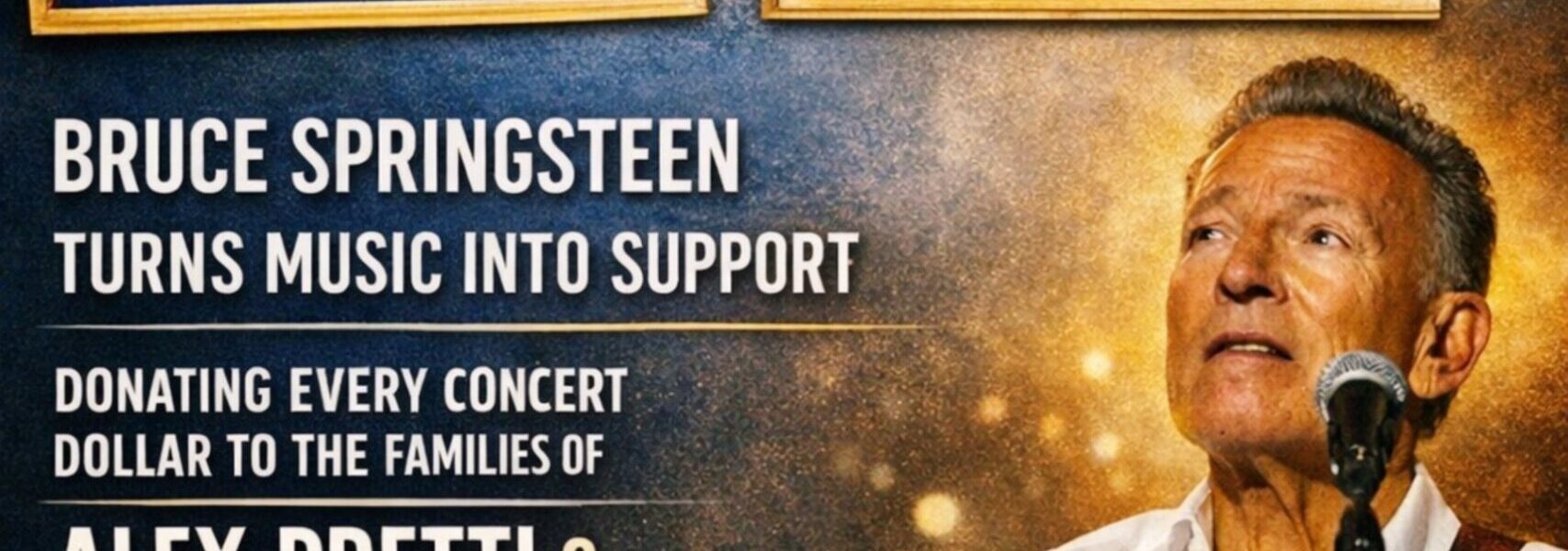
After releasing the song online, Springsteen later surprised audiences with a live performance in Minneapolis during a benefit concert organized to support the victims’ families. The event drew hundreds of attendees and helped raise funds for those grieving the loss of Pretti and Good.
Witnesses at the concert described a powerful atmosphere. As Springsteen stepped onto the stage with only his guitar and microphone, the room fell silent. Many audience members had followed the story closely and understood the weight behind the performance. When he began singing the opening lines of “Streets of Minneapolis,” the crowd reportedly listened in near silence, some holding candles or raising their phones to record the moment.
The fundraiser was more than just a concert — it became a moment of communal mourning and solidarity. Proceeds from the event went directly to the families of the victims, helping cover legal costs, memorial expenses, and ongoing support for relatives left behind.
Springsteen later admitted he had hesitated before releasing the song. He worried that its political message might sound too confrontational or that people would dismiss it as just another celebrity statement. But according to those close to the production of the track, he ultimately decided that silence would have been worse.
In a message shared with fans, he explained that sometimes quiet sympathy is not enough when lives have been lost and communities are struggling to be heard. Music, he believed, could help give voice to grief and anger in a way that speeches or statements might not.
The response to the song demonstrated that many listeners agreed. Within days of its release, millions of people streamed “Streets of Minneapolis,” spreading the track across social media platforms and sparking discussions about the events that inspired it. Supporters praised the song as a courageous act of solidarity, while critics accused Springsteen of politicizing tragedy.

Such reactions are not unusual for protest music. Historically, protest songs have often emerged during moments of social upheaval, offering artists a way to express dissent and rally public attention around controversial issues.
For Springsteen, however, the focus remained on the human stories behind the headlines. In interviews and statements surrounding the song, he repeatedly emphasized that the tribute was not about politics alone but about remembering two individuals whose lives ended in circumstances that shocked their community.
Friends described Alex Pretti as a dedicated nurse who spent long hours caring for patients in intensive care units. Renée Good was remembered as a compassionate mother and neighbor known for helping others. Their lives, supporters said, reflected the quiet everyday courage that often goes unnoticed until tragedy brings it into the spotlight.
By turning their stories into music, Springsteen hoped to ensure that their names would not fade into statistics or political talking points. Instead, he framed them as symbols of a community’s resilience and of the broader debate about justice, safety, and human dignity.
The impact of “Streets of Minneapolis” continues to ripple beyond the music world. The song has become part of the larger cultural response to the Minneapolis events, joining protests, public investigations, and ongoing legal scrutiny of the federal operation that led to the deaths.

For many listeners, the song’s lasting message lies in its simplicity: a reminder that behind every political conflict are real people, real families, and real communities trying to heal.
And in the tradition of protest music that stretches back generations, Bruce Springsteen once again used his voice — not just to entertain — but to bear witness.