

The Velvet Gavel: Jon Stewart’s Viral “Truth Bomb” and the Anatomy of a Political Myth
WASHINGTON, D.C. — In a city accustomed to partisan gridlock and carefully scripted outrage, the idea that Jon Stewart would deliver the most explosive moment in a congressional hearing sounded almost cinematic.
According to viral posts that spread rapidly online, the former late-night host stepped into a tense committee session on national identity and civic responsibility and stunned the room into silence with a blistering rebuke of lawmakers. Within minutes, clips labeled “The Stewart Truth Bomb” were circulating across social media, racking up millions of views.
But as with many stories tailor-made for the algorithm, the reality is more complicated.
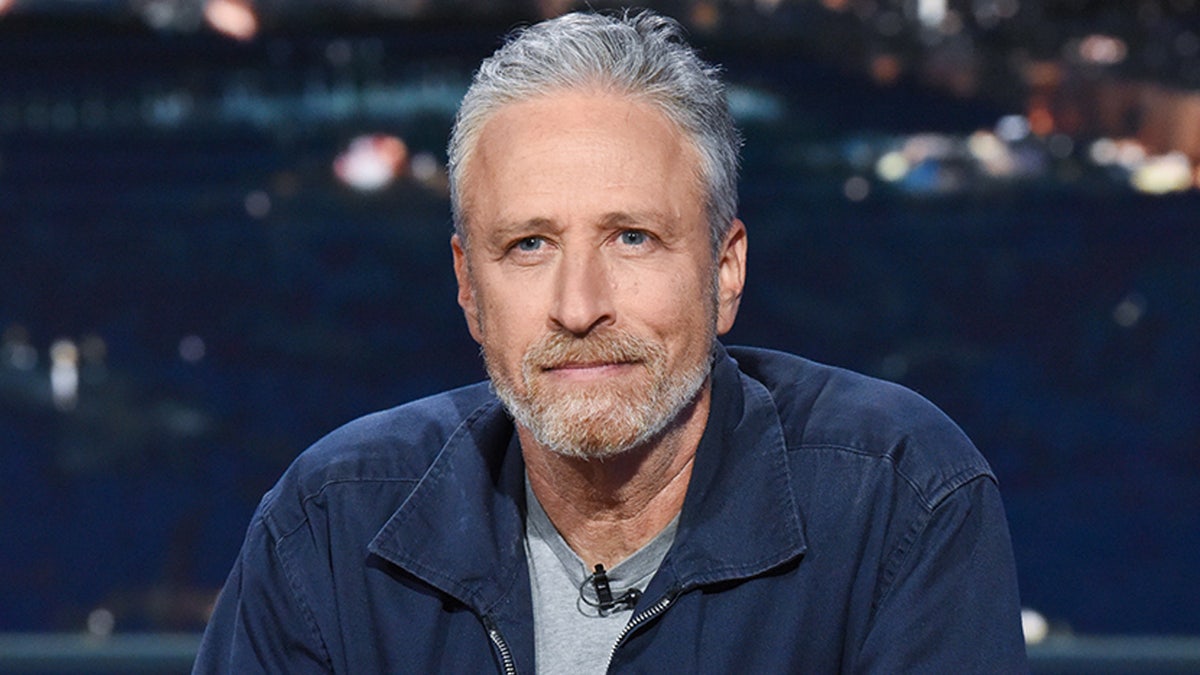
The Viral Moment
The online narrative paints a dramatic scene: a sluggish hearing filled with bureaucratic jargon suddenly transformed when Stewart leaned into the microphone. Known for his sharp wit and moral clarity, he allegedly delivered a searing monologue on patriotism that left lawmakers scrambling.
One widely shared quote attributed to him reads: “I’m tired of people who keep insulting the country that gave them everything.”
The posts describe stunned silence, shouting lawmakers, and a presiding official struggling to restore order. Within half an hour, the hashtag #StewartTruth was reportedly trending worldwide.
Supporters hailed the moment as courageous and cathartic — proof that an entertainer could say what career politicians would not. Critics, meanwhile, accused Stewart of grandstanding and deepening partisan divides.
It was, in every sense, a perfect internet spectacle.
Chaos, Cameras, and Commentary
In the viral version of events, the hearing spirals into open conflict. Lawmakers protest. Accusations of bigotry and misconduct fly across the chamber. Stewart, unflinching, reportedly doubles down with a sharp, quotable line that becomes the centerpiece of the online storm.
Commentators on both sides quickly frame the incident to fit their narratives. Some call him a voice for the “silent majority.” Others argue that celebrities have no place hijacking legislative proceedings.
Within hours, millions of views accumulate across platforms. Reaction videos multiply. Cable panels debate whether Stewart crossed a line — or simply drew one.
But amid the noise, a critical question emerges:
Did any of this actually happen?

Separating Fact from Viral Fiction
Despite the dramatic storytelling, there are no official records of such a congressional confrontation taking place. No verified transcripts, no official committee schedules, and no formal statements support the claim that Jon Stewart delivered the alleged speech in a recent hearing of this kind.
In fact, similar scripts have surfaced repeatedly online in recent months — often attributed to different public figures. Variations of the same “one-way ticket” or “if you hate this country, leave it” speech have previously been linked to actors, musicians, and athletes.
The structure is familiar: a beloved cultural figure enters a political setting, confronts an elected official, delivers a morally forceful rebuke, and leaves the establishment reeling. The details change. The emotional arc remains the same.
It’s a formula designed for virality.
Why the Story Resonates
Jon Stewart’s real-life public persona helps fuel the believability of the myth. Throughout his career, he has blended satire with sharp political commentary. His advocacy for 9/11 first responders and veterans demonstrated that his engagement with public policy extends beyond punchlines.
He is, for many Americans, a trusted voice — someone perceived as willing to challenge power with intelligence and conviction.
That credibility makes fictional scenarios easier to accept at face value.
The viral “Truth Bomb” taps into a broader cultural longing: the desire for unscripted clarity in an era of carefully managed messaging. It imagines a moment when someone outside the political class says what others only whisper — and does so without fear.
In an age of polarization and fatigue, that narrative carries emotional power.
The Digital Aftermath
Even without verified evidence, the story’s impact has been substantial. Online debates continue. Supporters circulate the quotes as inspirational memes. Critics decry the blurring of fact and fiction in modern media consumption.
The episode underscores how quickly compelling storytelling can outpace verification. A dramatic scene, a recognizable figure, a resonant quote — these elements can generate a self-sustaining cycle of engagement.
For some, the myth becomes more meaningful than the truth.
A Reflection of the Times
:max_bytes(150000):strip_icc():focal(749x0:751x2)/Jon-Stewart-Daily-Show-012016-fe79d53773ef4461a14d69d08b929c9f.jpg)
Whether viewed as misinformation or modern folklore, the “Stewart Truth Bomb” reflects something real about the current moment. Many Americans crave decisive moral statements in a political landscape often dominated by nuance, compromise, and procedural complexity.
By placing a familiar, outspoken personality at the center of a fictional confrontation, the story channels frustration into a cinematic release.
But it also serves as a reminder of the importance of scrutiny. In a digital ecosystem driven by speed and emotion, viral does not always mean verified.
Conclusion
Jon Stewart remains a significant cultural and political voice. His past advocacy and commentary are well documented and impactful. However, the specific congressional showdown now circulating online appears to be part of a broader trend of viral political fiction.
The story may be compelling. It may even feel emotionally true to some.
But as the line between entertainment and reality continues to blur, separating fact from fiction matters more than ever.