They Thought He Was Just an Old Texas Rancher — Until His Brutal Past Revealed Why No One Dared Challenge His Empire!
In the unforgiving landscape of Texas, where fortunes are built on land, cattle, and blood, one powerful man stands above nearly everyone around him. His name is Eli McCullough, a wealthy rancher whose influence reaches far beyond the boundaries of his property. To outsiders, he appears to be an aging businessman determined to protect his family. But behind his carefully controlled appearance lies a terrifying past, shaped by captivity, violence, betrayal, and a lifetime of fighting for survival.
In The Son (2017–2019), Pierce Brosnan delivers a commanding performance as Eli McCullough, the patriarch of a powerful Texas family struggling to maintain its empire during a period of political unrest and economic transformation.
Based on Philipp Meyer’s acclaimed novel, the AMC Western drama moves between two periods: Eli’s traumatic childhood in 1849 and his increasingly ruthless struggle for power in 1915.
What emerges is a gripping portrait of a man who survived unimaginable suffering, built an extraordinary fortune, and eventually discovered that protecting an empire could cost him the people he loved most.

A Childhood Destroyed by Violence
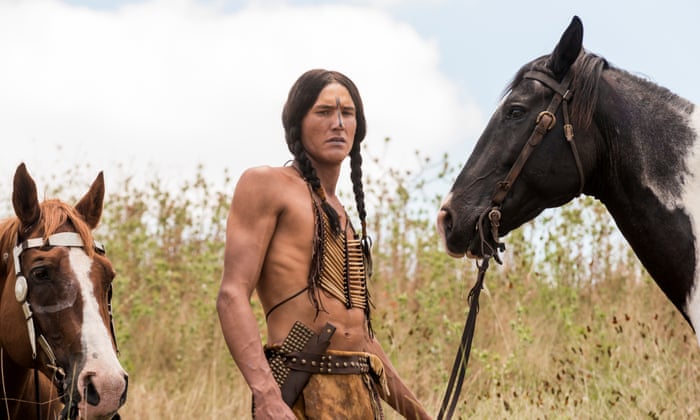
Young Eli McCullough’s life changes forever after he is captured by Comanche warriors.
Long before Eli becomes a feared Texas landowner, he is a young boy living on the dangerous frontier. His childhood is shattered when Comanche warriors attack his family’s homestead in 1849.
His family is torn apart, and the young Eli is taken captive.
Suddenly separated from everything familiar, he finds himself surrounded by people whose language, customs, and way of life he does not understand.
At first, captivity feels like a death sentence. He is frightened, isolated, and forced to confront the possibility that he may never return to the world he once knew.
But something extraordinary happens.
Rather than simply remaining a helpless prisoner, Eli gradually learns to survive among the Comanche. Under the guidance of the respected warrior Toshaway, portrayed by Zahn McClarnon, he begins adapting to a new world.
He learns the importance of endurance, courage, loyalty, and the ability to make difficult decisions.
Over time, Toshaway becomes a father figure, and Eli develops relationships that fundamentally change his understanding of identity and belonging.
Yet the lessons he learns are not without consequences. Violence and loss become deeply embedded in his character.
As the boy grows older, the survival instincts developed during captivity form the foundation of the ruthless man he will eventually become.
The Rise of a Ruthless Texas Empire
Decades later, Eli has transformed himself into one of the most powerful ranchers in South Texas.

By 1915, Eli McCullough has become a formidable figure in Texas society.
His cattle empire represents decades of ambition, sacrifice, and determination. He possesses wealth, political influence, and the loyalty of men who understand that challenging him can be dangerous.
But the world around him is changing.
The old ranching economy faces new pressures, and oil promises enormous fortunes to those willing to seize emerging opportunities.
Eli recognizes that controlling land is no longer enough. If his family is to remain powerful, it must adapt to a rapidly transforming economy.
However, expanding his business empire requires more than intelligence and financial resources.
It demands aggression, manipulation, and the willingness to destroy anyone standing in his way.
Eli’s methods increasingly bring him into conflict with neighboring families, particularly the prosperous García family.
What begins as competition over power and property gradually becomes a bitter struggle involving prejudice, suspicion, violence, and revenge.
In Eli’s mind, every ruthless decision is justified by one overriding objective: ensuring that the McCullough family survives.
But his relentless determination begins destroying the very family he claims to protect.
A Father Feared by His Own Family
Pete McCullough struggles between loyalty to his father and his own sense of right and wrong.
Among those most deeply affected by Eli’s brutal leadership is his son Pete, portrayed by Henry Garrett.
Unlike his father, Pete struggles to accept violence as the answer to every problem. He believes that compassion, fairness, and restraint still have a place in a world increasingly dominated by greed and revenge.
This difference creates a painful conflict between father and son.
Eli sees Pete’s hesitation as weakness. Pete sees his father’s ruthlessness as a danger to everyone around them.
Their disagreement becomes especially intense as tensions escalate between the McCullough and García families.
Pete’s connection with María García complicates the conflict further, forcing him to choose between the expectations of his family and his own conscience.
When the McCulloughs’ violence devastates the García family, Pete finds himself unable to remain loyal to his father’s decisions.
He eventually leaves with María, rejecting the security and privilege of the empire Eli has spent his life creating.
For Eli, this represents a devastating betrayal. He has sacrificed everything to build a future for his children, yet the very son he hoped would continue his legacy turns against him.
The tragedy is that neither man can fully understand the other’s perspective.
Pete sees the human cost of his father’s ambition. Eli sees a son who refuses to recognize the brutality required to survive.

The Granddaughter Who Could Inherit Everything
Jeannie McCullough admires her grandfather, but she must decide what kind of legacy she wants to inherit.
While Eli’s relationship with Pete deteriorates, his granddaughter Jeannie offers a different possibility for the family’s future.
Intelligent, determined, and fiercely independent, Jeannie refuses to accept the limited expectations placed upon women in early twentieth-century Texas.
She admires her grandfather’s strength and wants to understand the empire he has created.
Eli recognizes her ambition and sees qualities in her that remind him of himself.
But Jeannie’s fascination with her grandfather also raises an unsettling question.
Will she inherit his courage and determination, or will she eventually adopt the same ruthlessness that has damaged the family?
Through Jeannie, The Son explores how power passes from one generation to the next, carrying both opportunity and the burden of past wrongdoing.
The Terrible Price of Power

Behind Eli’s commanding appearance stands a man haunted by decades of violence and loss.
What makes The Son particularly compelling is that Eli McCullough cannot easily be classified as a hero or villain.
His childhood experiences explain his instinct to dominate, but they do not excuse the suffering caused by his decisions.
He understands loyalty yet frequently relies on intimidation. He values family but struggles to respect the independence of his children. He wants security but repeatedly creates conflicts that threaten everything he owns.
As the story progresses, the consequences of his choices become impossible to ignore.
The family empire grows increasingly entangled in resentment, fractured loyalties, and violence. Old enemies remain dangerous, while new economic opportunities introduce further struggles for control.
The Western frontier that once shaped Eli is disappearing, replaced by a modern world in which money, oil, and political influence increasingly determine who holds power.
Yet Eli remains trapped by the lessons of his youth.
The man who once survived captivity by adapting to a new world now struggles to accept that his own world must change.
The Son ultimately becomes more than the story of a wealthy rancher fighting to maintain his property. It is a powerful examination of how trauma, ambition, and inherited violence shape generations.
Pierce Brosnan gives Eli a commanding presence, balancing intimidating confidence with moments of emotional vulnerability.

The sweeping Texas landscapes reinforce the grandeur of the family’s ambitions, while the intimate conflicts reveal the painful reality concealed beneath their wealth.
The series premiered in 2017 and concluded in 2019 after two seasons, tracing the McCullough family’s troubled legacy across generations.
In the end, the central question is not simply whether Eli McCullough can protect his empire.
It is whether an empire built through fear and bloodshed can ever provide the peace and security its founder desperately seeks.
Eli has spent his entire life refusing to surrender. He survived a childhood that should have destroyed him, became one of the most powerful men in Texas, and forced his enemies to recognize his authority.
But the greatest threat to his legacy is not an armed opponent or a rival businessman.
It is the devastating possibility that everything he built came at the expense of his own family.
And that is what makes The Son such a haunting Western saga: a man can conquer the frontier, accumulate a fortune, and command the respect of an entire community—yet still lose the people who matter most.
