Two Legendary Outlaws, One Unforgettable Love Story, and the Wild West’s Greatest Adventure
The Western Classic That Turned Two Outlaws Into Hollywood Legends
Some Western movies are remembered for their gunfights. Others become famous for their heroes, breathtaking landscapes, or unforgettable endings. But
Butch Cassidy and the Sundance Kid (1969) achieved something extraordinary by combining all these elements with humor, friendship, romance, and a bittersweet reflection on the end of the American frontier.
Directed by George Roy Hill, the film stars Paul Newman as the charming outlaw Butch Cassidy and Robert Redford as his quieter, deadly accurate partner, the Sundance Kid. Alongside them, Katharine Ross delivers a memorable performance as Etta Place, the woman whose presence brings warmth and emotional depth to their dangerous world.
More than half a century after its release, the film remains one of Hollywood’s most beloved Western adventures, capturing a moment when the old frontier was disappearing and even its most famous outlaws could no longer outrun the changing world.
Butch Cassidy and Sundance: A Friendship Built on Danger

At the heart of the film lies the extraordinary chemistry between Paul Newman and Robert Redford.
Butch Cassidy is clever, charismatic, and constantly searching for another opportunity. He prefers finding imaginative ways out of trouble rather than immediately reaching for his gun.
Sundance, by contrast, is a man of fewer words. His calm personality hides extraordinary marksmanship, making him one of the most dangerous gunfighters in the West.
Together, they lead a life filled with robberies, narrow escapes, and unpredictable adventures.
Their partnership is not simply based on criminal ambition. It reflects a deep friendship built on loyalty, trust, and shared experiences.
Even when circumstances become desperate, their humor never entirely disappears.
This combination of danger and comedy helped redefine the Western genre, offering audiences characters who felt more approachable and human than the traditional larger-than-life gunslingers.
Etta Place: The Woman Behind the Outlaw Legend
While the two outlaws dominate much of the story, Etta Place, portrayed by Katharine Ross, provides one of the film’s most important emotional connections.
Etta is intelligent, independent, and fully aware of the risks surrounding Sundance’s life.
Her relationship with him reveals a softer side of the otherwise reserved gunfighter.
At the same time, her playful friendship with Butch creates some of the movie’s most charming and memorable moments.
One particularly famous sequence features Butch taking Etta on a bicycle ride through the countryside.
Accompanied by B.J. Thomas’s recording of “Raindrops Keep Fallin’ on My Head,” the scene briefly transforms the Western adventure into a celebration of freedom, innocence, and simple happiness.
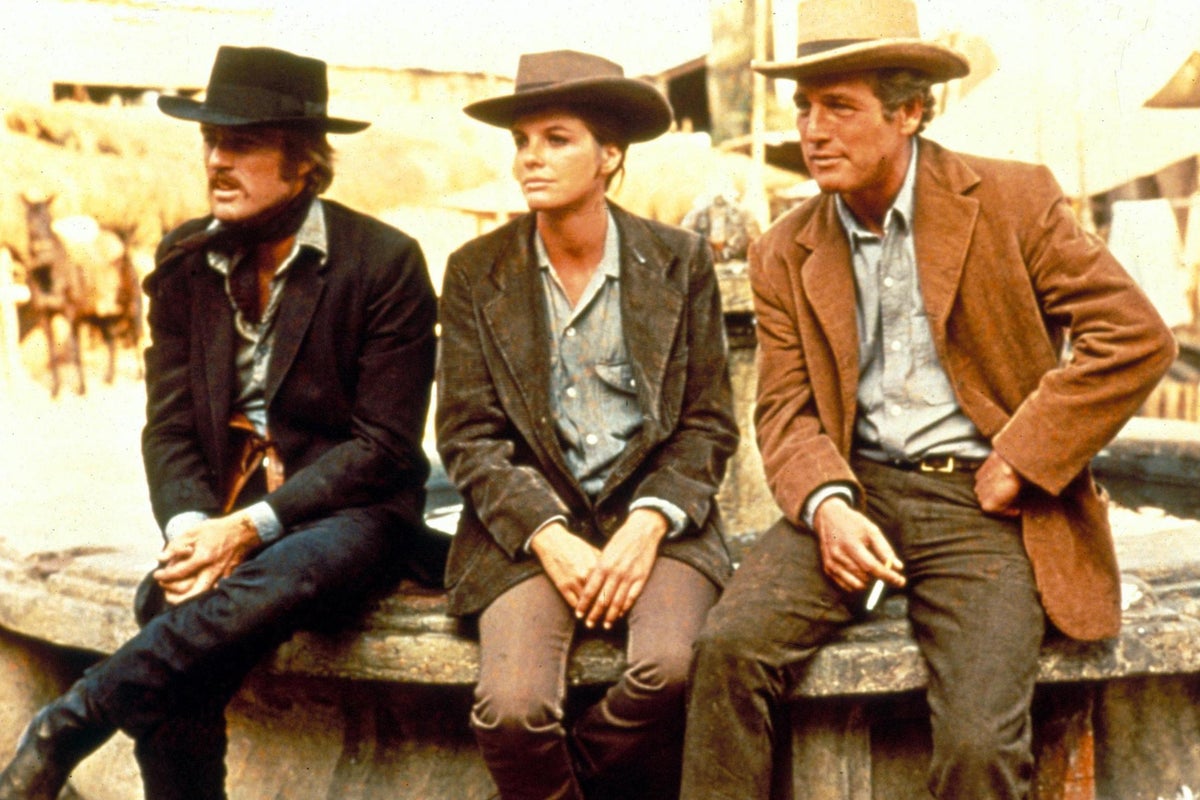
For a moment, the violence of the frontier seems far away.
The characters appear capable of enjoying a life untouched by the dangers constantly pursuing them.
But this peaceful interlude also contains a sense of sadness.
The audience gradually understands that such happiness cannot last forever.
The Bicycle Scene That Became a Hollywood Treasure
The bicycle sequence remains one of the most recognizable moments in classic American cinema.
Unlike the dramatic horseback chases and armed confrontations associated with traditional Westerns, this scene emphasizes humor, warmth, and playful romance.
Paul Newman brings effortless charm to the sequence, while Katharine Ross responds with expressions that make the interaction feel natural and affectionate.
The beautiful countryside reinforces the feeling of temporary escape.
Instead of pursuing another robbery or preparing for a confrontation, Butch simply enjoys making Etta smile.
The moment also reveals something important about his character.
Despite being a notorious outlaw, Butch possesses an almost childlike enthusiasm for adventure and novelty.
He sees possibilities where others see obstacles.
That attitude makes him enormously entertaining, but it also contributes to his inability to recognize when his dangerous lifestyle has reached its limits.
The bicycle becomes a subtle symbol of a changing world, representing technological progress that will eventually make the romanticized frontier obsolete.
When the Old West Begins to Disappear


As the story develops, Butch and Sundance discover that their reputation can no longer protect them.
Following a train robbery, a relentless posse begins pursuing the two outlaws across the rugged Western landscape.
Their familiar strategies become increasingly ineffective.
The men who once seemed capable of escaping almost anything suddenly find themselves struggling against forces they cannot easily defeat.
The pursuit becomes one of the film’s most gripping sequences, combining extraordinary scenery with mounting tension.
It also represents a larger historical transformation.
The frontier is changing.
Railroads, organized law enforcement, and expanding institutions are gradually replacing the loosely governed world in which men like Butch and Sundance once thrived.
Their freedom is becoming increasingly difficult to maintain.
Instead of surrendering, however, the partners make a remarkable decision.
They will attempt to escape their troubles by starting over somewhere far from the American West.
A Dangerous New Beginning in Bolivia
Believing that South America might offer new opportunities, Butch Cassidy and the Sundance Kid travel to Bolivia with Etta Place.
Their arrival introduces a different setting while maintaining the film’s familiar mixture of humor and danger.
At first, the idea of beginning again seems exciting.
Butch imagines new possibilities, while Sundance remains characteristically skeptical.
The realities of their situation soon become clear.
They face unfamiliar surroundings, language barriers, and the difficulty of adapting their outlaw methods to a different country.
Etta attempts to help them navigate their new environment.
The resulting scenes are frequently amusing, particularly when the men struggle to communicate during robberies.
Yet beneath the comedy lies an increasingly serious question.
Can two men who have spent their lives outside the law ever truly escape the consequences of their choices?
The answer becomes more troubling as their adventures continue.
The Final Showdown That Defined a Generation

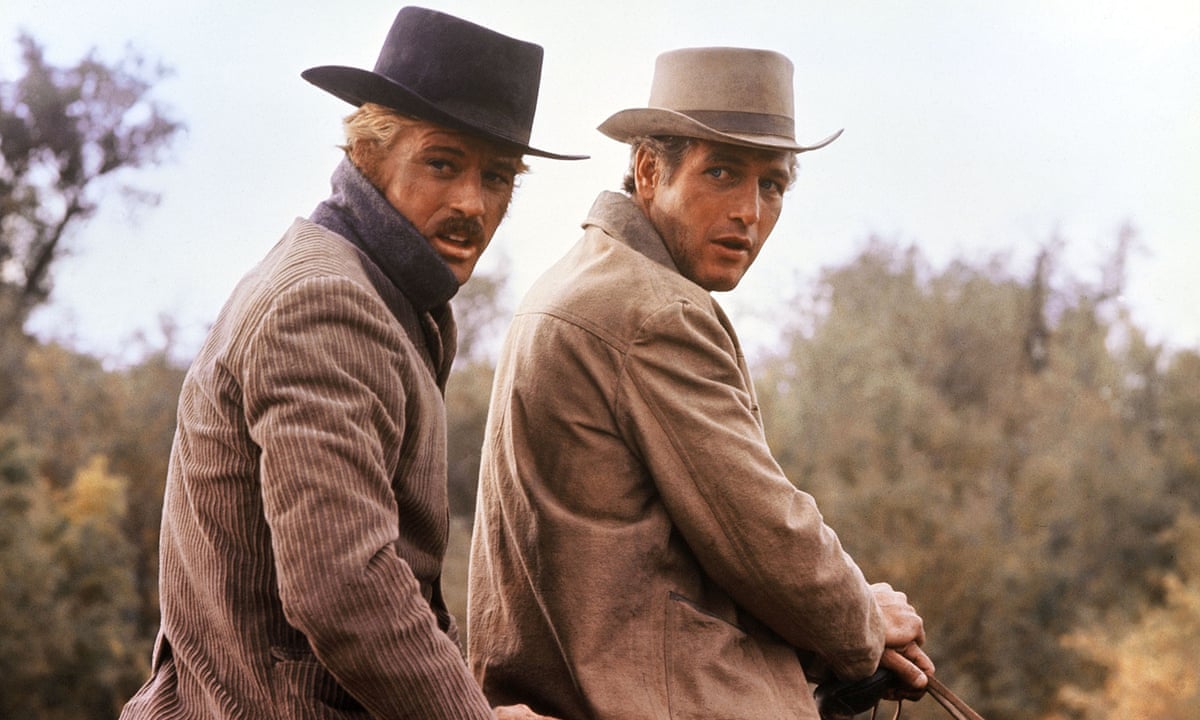
Few Western endings are as recognizable as the conclusion of Butch Cassidy and the Sundance Kid.
After years of running, the partners find themselves trapped in a desperate situation with overwhelming armed opposition.
Both men are wounded, and their chances of survival appear increasingly remote.
Nevertheless, their friendship remains intact.
They continue joking, planning, and imagining another escape.
Their refusal to abandon hope becomes both inspiring and heartbreaking.
Rather than offering a conventional depiction of their deaths, director George Roy Hill ends the film with a famous freeze-frame.
The decision preserves Butch and Sundance in one final moment of motion and defiance.
It is an artistic choice that transforms the ending from a straightforward tragedy into an enduring cinematic legend.
The audience is left remembering not merely how the men faced danger, but how their extraordinary partnership survived until the very end.
Why Robert Redford and Paul Newman Made Western History
The film’s lasting popularity owes much to the performances of its two leading stars.
Paul Newman makes Butch Cassidy irresistibly charismatic without disguising his recklessness.
Robert Redford gives Sundance a quiet intensity that balances Newman’s energetic personality.
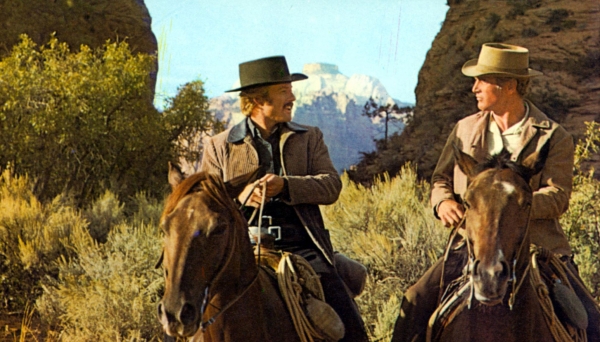
Together, they create one of cinema’s most memorable partnerships.
Katharine Ross contributes equally important emotional moments, ensuring that the story is not solely defined by its male leads.
The film’s cinematography, witty screenplay by William Goldman, and memorable music by Burt Bacharach further distinguish it from conventional Western adventures.
Released in 1969, the movie became an enormous commercial and critical success, ultimately winning four Academy Awards.
Its influence can still be felt in films built around charming antiheroes, unlikely friendships, and adventures that balance comedy with tragedy.
A Timeless Story of Friendship, Freedom, and the Price of Living Outside the Law
What makes Butch Cassidy and the Sundance Kid truly unforgettable is that the film never depends exclusively on its action scenes.
Its greatest strength lies in the relationships between its characters.
The playful bicycle ride, the quiet moments with Etta, the tension of the pursuit, and the desperate adventure in Bolivia all contribute to a story about people trying to preserve their freedom in a world that is changing around them.

Butch and Sundance are not flawless heroes.
They are criminals whose charm cannot erase the consequences of their actions.
Yet their loyalty, humor, and refusal to abandon one another make them compelling figures.
The film captures both the romantic appeal of frontier independence and the reality that such a way of life cannot continue forever.
Butch Cassidy and the Sundance Kid (1969) remains a masterpiece because it understands that even the greatest legends must eventually confront the end of their era.
And while the Wild West may have disappeared, the friendship between Butch Cassidy and the Sundance Kid continues to live on through one of the most beloved films in Hollywood history.
